


Hit Enter to Search or X to close
Make Them Feel, Not Just See: A conversation with Mikheil Zibzibadze
15 Minutes with Mikheil Zibzibadze. On working fast, trusting instinct and why a director who over-explains has already lost the room.

Make Them Feel, Not Just See: A conversation with Mikheil Zibzibadze
Mikheil Zibzibadze is still a student. He is also already working. That combination is less common than it sounds. Most people in film school are building toward something. He is already inside it, moving between music video, documentary and short film, not because the opportunities came in that order, but because each idea seemed to call for a different form. He shot a music video in Brooklyn in three days on almost no sleep. He made a documentary with sixteen people in one day. He made a short film in fifteen minutes with one camera, one lens, and street light. He talks about all of these with the same quiet certainty, as if difficulty was simply part of the description.

What runs through all of it is a question he keeps returning to, under different conditions and with different material. Not how to show something. How to make someone feel it.
He is clear about where every project begins. Not with structure, not with a treatment, not with a brief. "It depends on what I want to say. I always try to make people feel what I'm feeling, not just see it. Even if everyone feels something anyway, I want to go deeper, and that depth tells me which form to choose." Emotion, for him, is not a result. It is a starting point. When he tries to work without it, he says, it never feels as strong.
"I don't invent feelings. I translate real ones into images."
Limitation works the same way, though he does not romanticise it. Film never has enough time or budget. That is just the reality. What matters is knowing what you are trying to protect inside those conditions. "The sharpest focus comes when I clearly understand what the main character is trying to say and what emotional background they're carrying. Once I know that, everything else becomes easier."

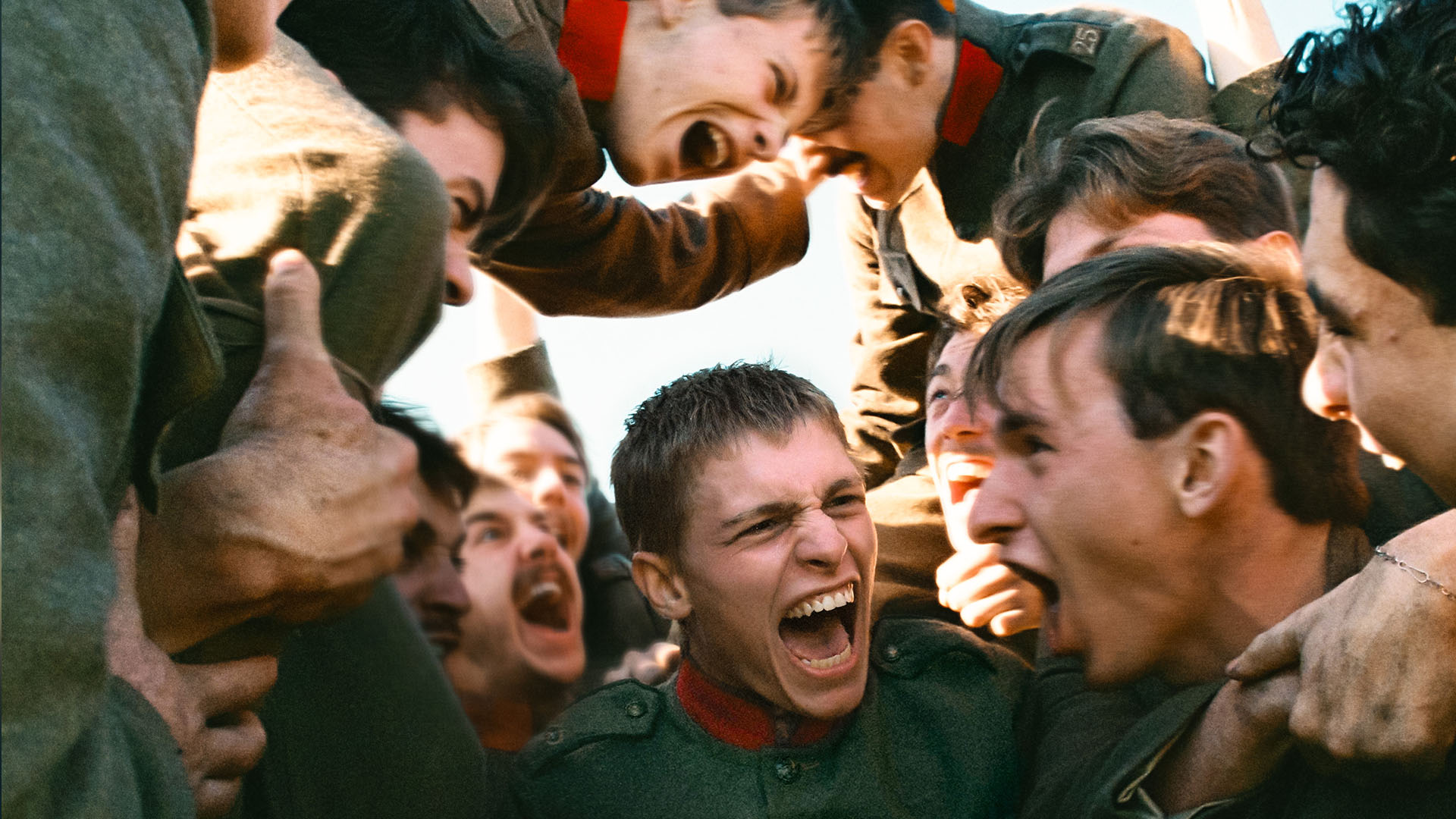
Na Greenpoincie came with a schedule that had already collapsed before shooting began. Three days for a music video introducing a Polish-American artist who grew up in the United States, told through movement, scenes and choreography. It was difficult for the artist to perform and stay in character, but the set held together. What Mikheil gave up was not content. "The only thing you remove is yourself. Rest, comfort, pauses, sometimes even sleep. You commit fully, because one small mistake can cost you a lot."
The film was never built around narrative. It was built around energy, around the feeling that what you are watching has not quite finished yet. At the Brooklyn premiere, people who knew how short the schedule had been were not expecting what they saw. There were ovations. He remembers being surprised by the reaction, though perhaps he shouldn't have been.
"Emotion comes first. Everything else follows"
Composition is what he names when asked what feels most fragile working alone with camera and light. "You can slightly move the camera, adjust the light, change focal length, and the whole composition changes. One small shift can add or remove something that breaks the image and the idea." There is very little margin when you are this close to the material.

Beyond the Desks was built in a single day. Sixteen interviews, a school in New York, students who had agreed to be filmed. Nobody was sure how many would actually come. In New York, he notes, everyone is busy. There was a real chance that almost no one would show up. Almost everyone did.
His method for keeping each person distinct was not a technique so much as an orientation. "I didn't try to make them similar. I gave each person space to be themselves and listened carefully. Small changes in questions, tone and timing helped each participant keep their own emotional identity."

The music came from the same place. He had reference tracks at first, then watched back what people said and how they said it. He and his composer built four tracks, for the trailer, the introduction, the open conversations and the final emotional moments. The sound was built around the emotions, not placed on top of them. There was a moment somewhere in that process when the project changed for him. "It stopped being just an idea and became something human. And I knew I had to protect that honesty above everything else."
Acceptance was made the same day it was conceived. Almost no time, very little energy. One camera, one lens, street light, one actor. Fifteen minutes total. "Mystery works best with pressure. When you don't have time, you don't over explain. You trust instinct. That tension, that rush, that uncertainty, it fits a mystery story perfectly."
"When you don't have time, you don't over explain. You trust instinct."
He trusts post-production. Music, colour grading, editing. These can build something from very little if you stay focused. As a juror he says he feels a film's intention almost immediately. "When a film knows what it wants to say, every choice feels intentional, camera, sound, pacing. Nothing feels accidental or confused." What he sees repeated most often is the opposite. Filmmakers fighting the limits instead of working inside them, trying to do more than the material can hold.
Being a student keeps him open, he says. It reminds him he doesn't have all the answers, and that makes him more willing to try things that might fail. The skill that took him longest to trust was his own vision. Even when he can't fully see everything in the moment, he keeps going.

His films come from his life. He does not invent feelings. He translates real ones into images. The parts that are too private stay in shadow, touched sometimes but not exposed. Protecting them, he says, is how he stays honest in the work he does share.
When the camera is off he is walking, listening, letting things slow down. "That's when ideas come, feelings come, and that's how I create." The work shifts rather than stops. Somewhere in the quieter space between one project and the next, something else starts to form.


.svg)



Get weekly updates
Follow us -
@theFLICKERMAGAZINE


.png)
Join Our Newsletter
Get a weekly selection of curated articles from our editorial team.
Join Our Newsletter
Get a weekly selection of curated articles from our editorial team.