


Hit Enter to Search or X to close
Under Our Skin at Tate Library Brixton explores queer identity beyond visibility
A group exhibition bringing together 35 artists and over 50 works at Tate Library Brixton. Curated by Xavier White, Under Our Skin looks at queer identity, institutions, and lived experience beyond visibility.
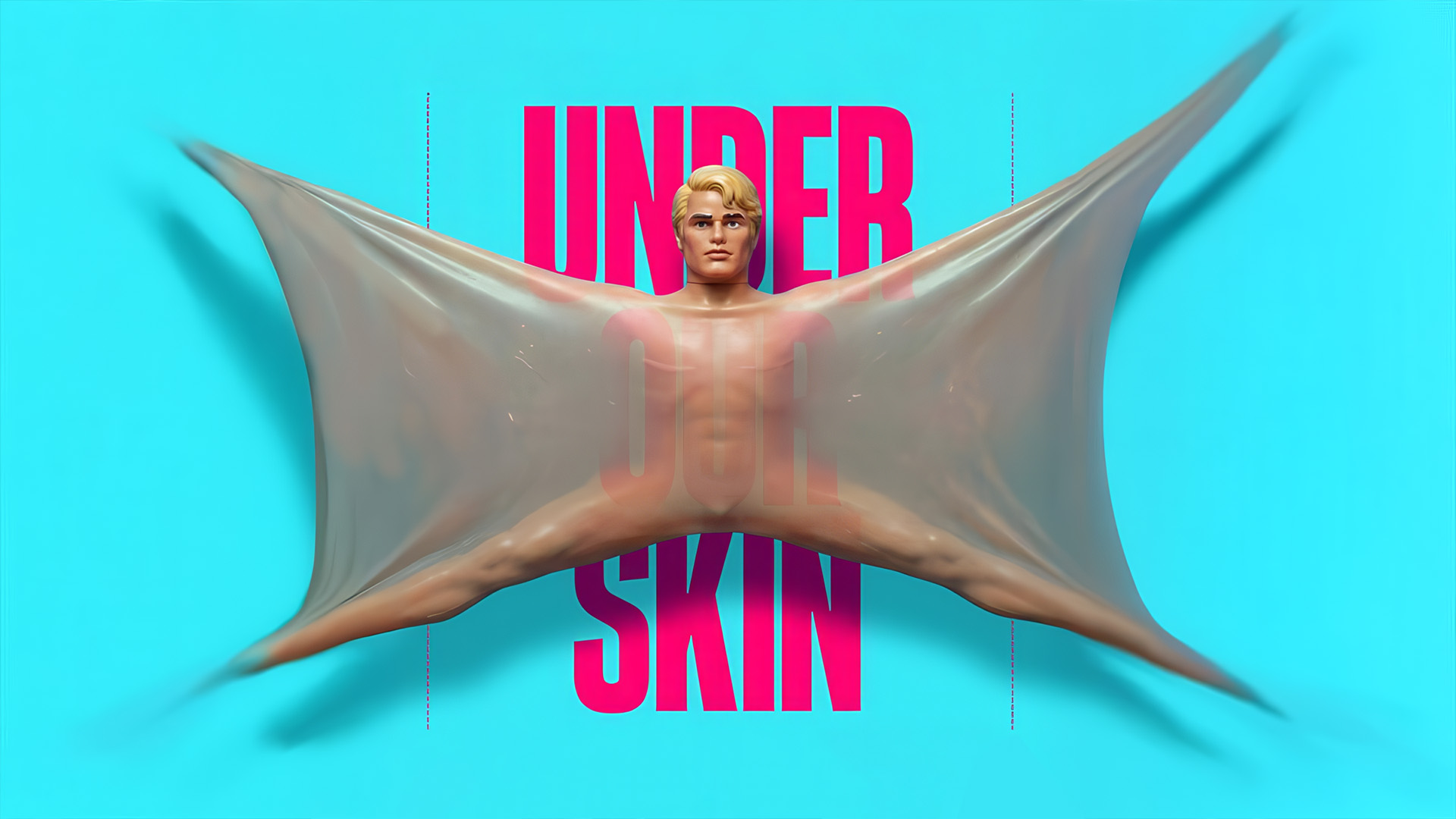









Under Our Skin at Tate Library Brixton explores queer identity beyond visibility
Under Our Skin at Tate Library Brixton
Under Our Skin is a group exhibition presented at Tate Library Brixton during LGBTQ+ History Month. Curated by London based artist and curator Xavier White, the exhibition brings together 35 artists and more than 50 artworks, installed across walls, windows, floors, and entry points throughout the library. The space is used fully, with work appearing wherever it can exist rather than being confined to a single gallery room. Artists at early stages of their careers are shown alongside established names, without hierarchy or visual separation.
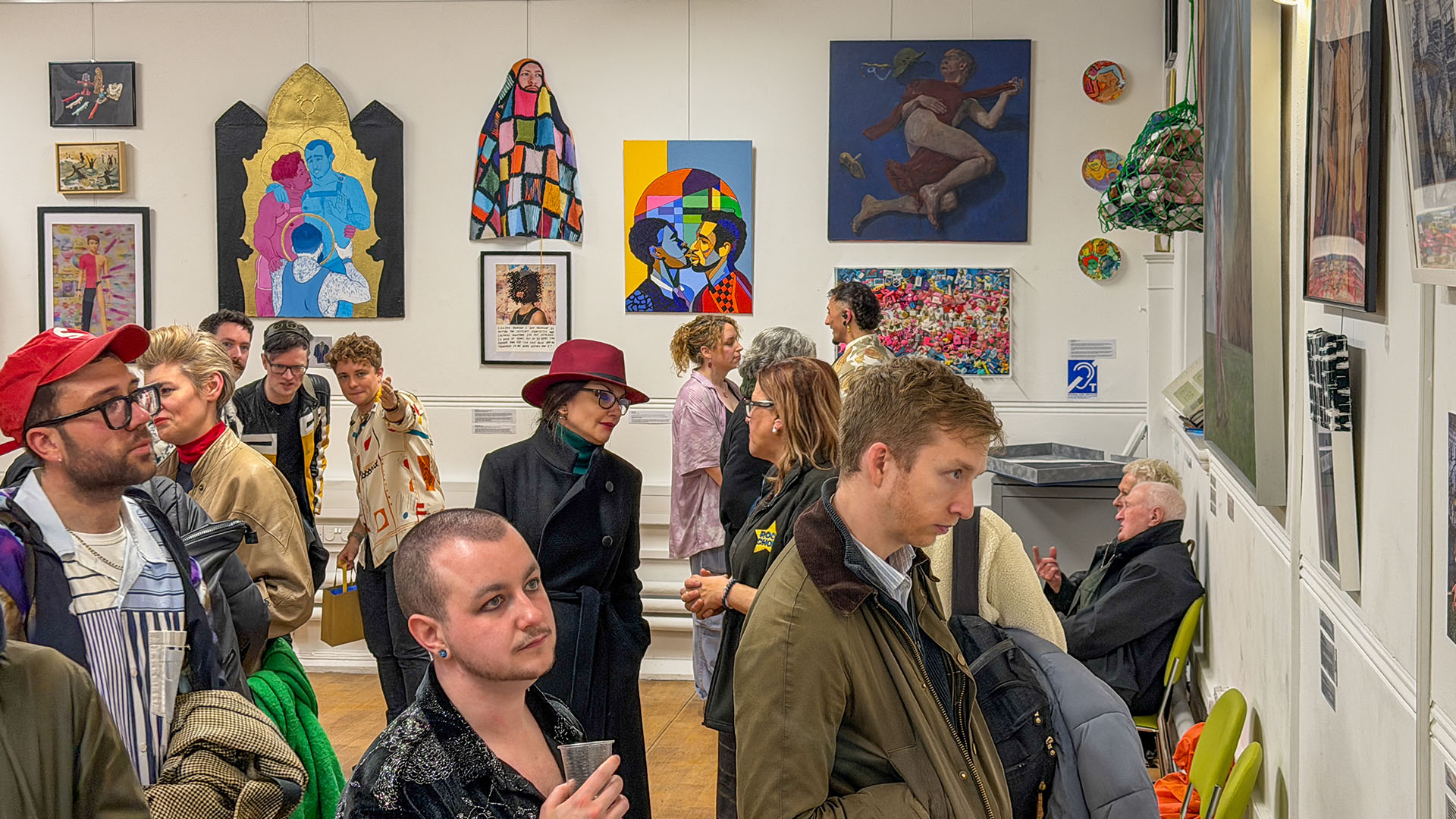
In his introduction, White spoke about the exhibition as a way of reflecting on who people are, who they have been, and who they are still trying to become. He described Under Our Skin as focusing on the things that sit beneath what is visible, including early lessons, internalised behaviour, and experiences that continue to shape people over time.
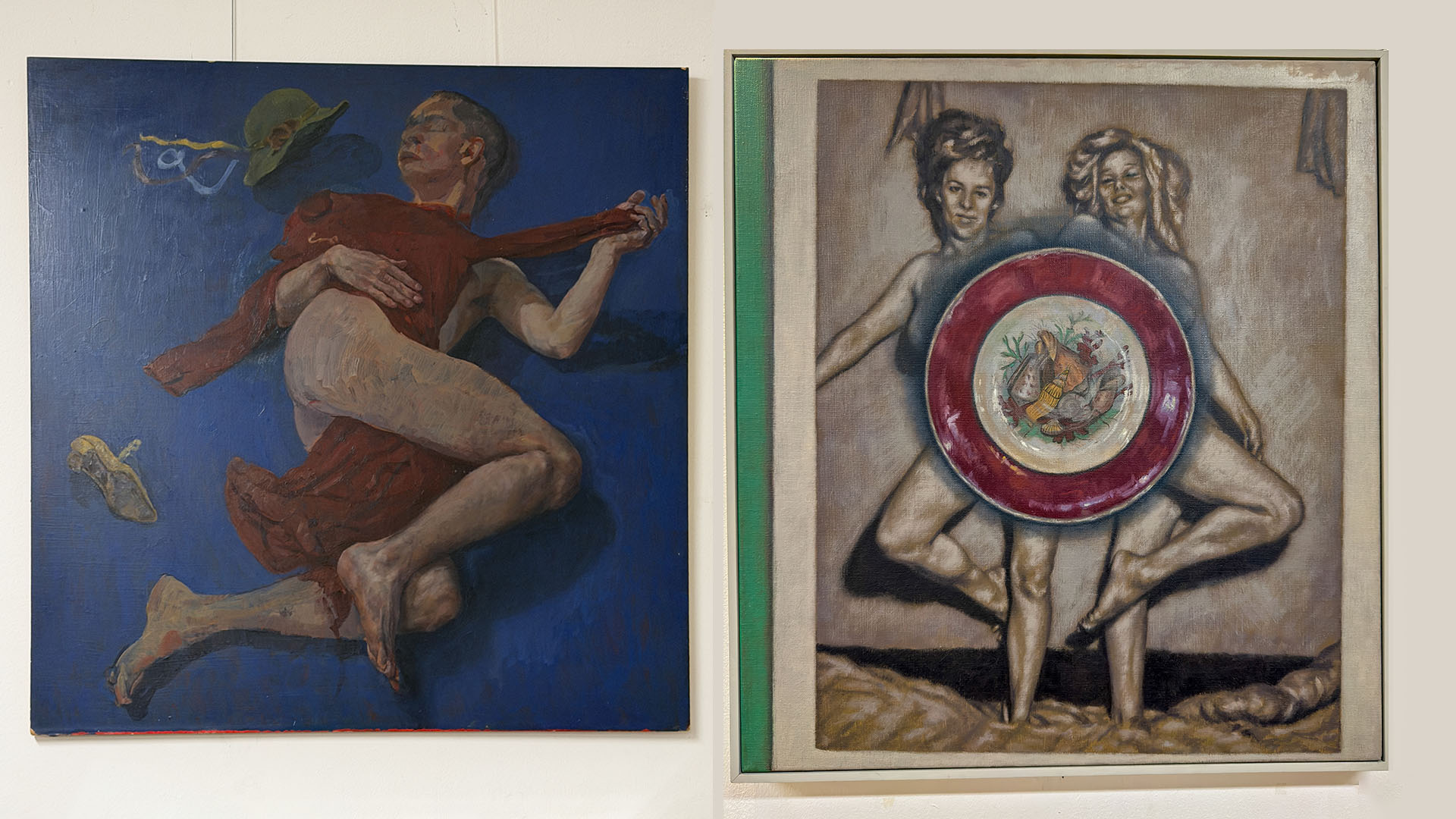
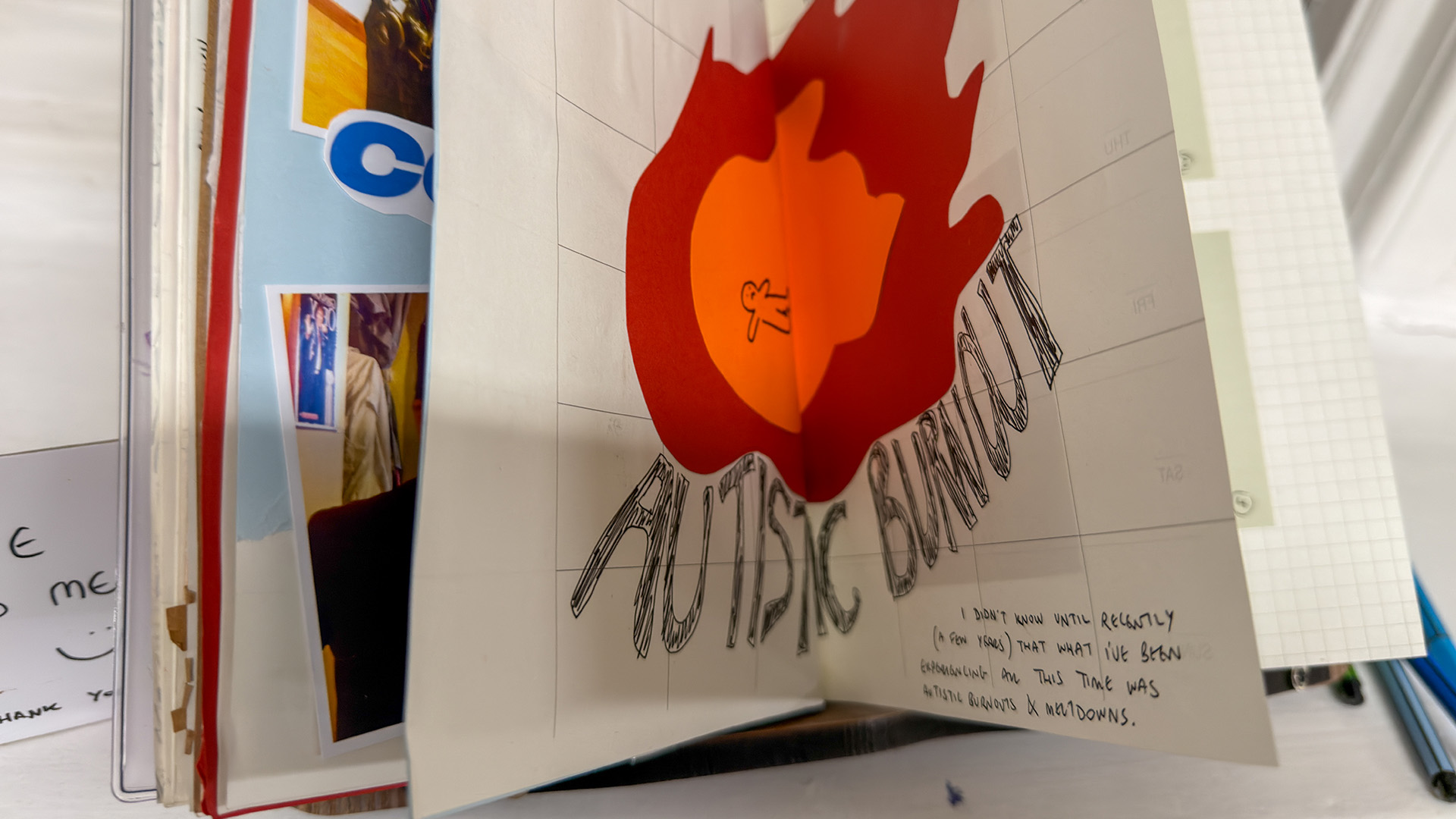
The exhibition moves through familiar environments such as schools, homes, and institutions, looking at how these spaces contribute to shame, desire, curiosity, resilience, and survival. Identity here is not treated as fixed or resolved, but as something formed gradually through pressure, repetition, and lived experience.
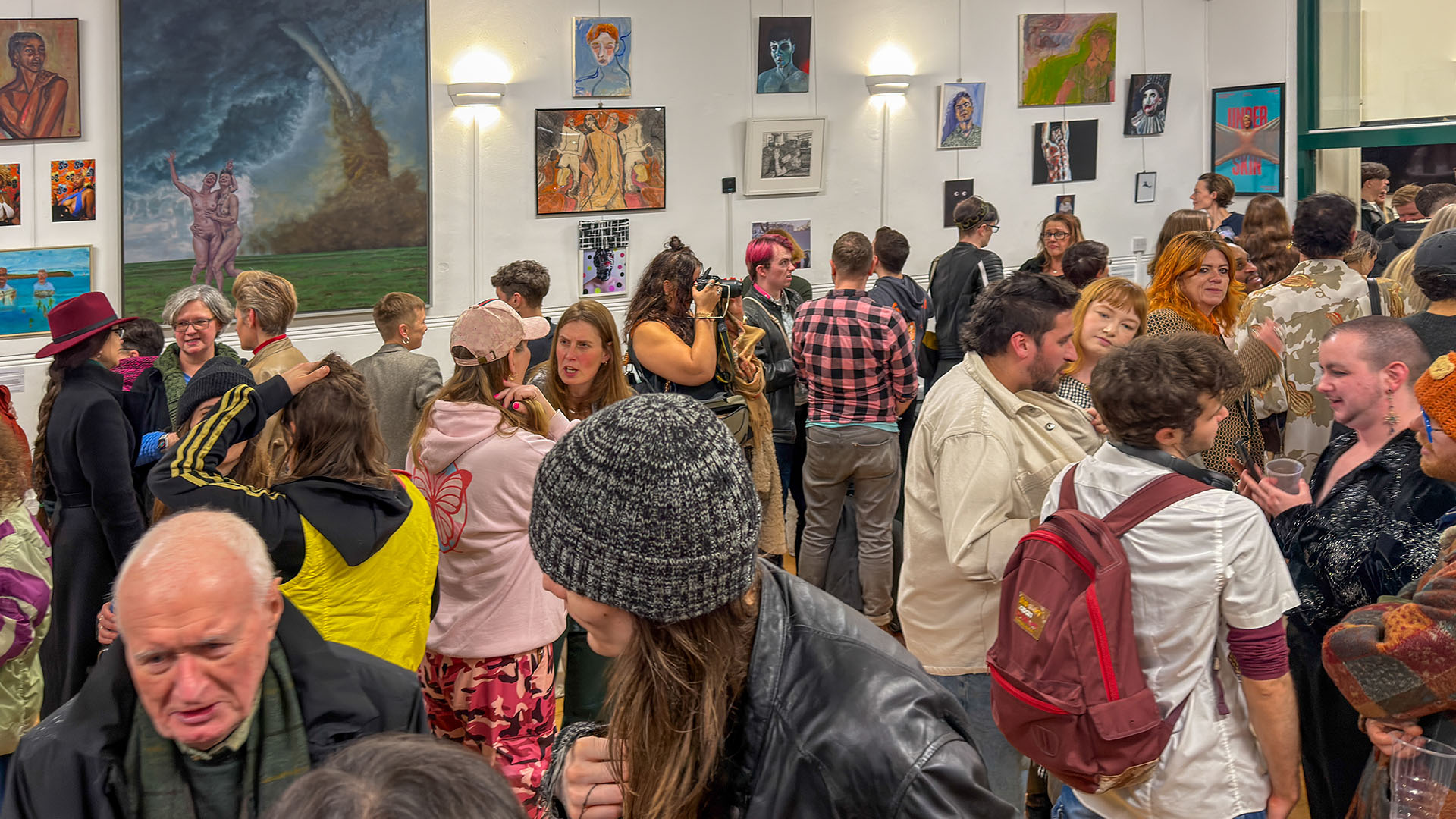
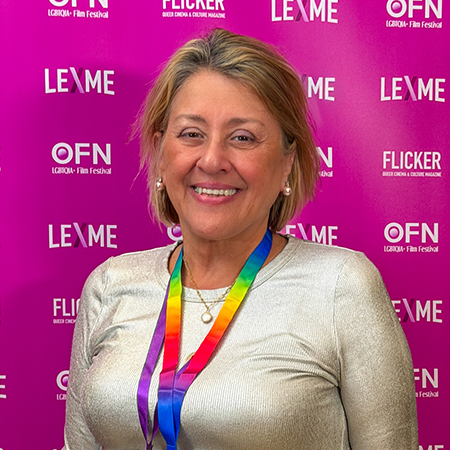
A panel discussion held within the exhibition expanded on these ideas. White was joined by artist and Senior Collections Coordinator at the Government Art Collection James Morrison, and independent curator, researcher, and socially engaged art practitioner Veronica Revuelta Garrido. Morrison spoke about queer art as working through a non traditional lens, particularly for those who grew up without representation. Reflecting on his own experience growing up during Section 28, he spoke about the impact of absence, and how not seeing queer lives reflected in culture or education shapes understanding and self perception. From his position working inside a national collection, he also addressed the responsibility institutions carry in how queer work is framed, stored, and shown over time.

Revuelta focused on what can be lost when queer work is presented without sufficient care or context. She spoke about how institutions sometimes show queer art without fully engaging with the emotional, political, or lived realities behind it, which can result in work being flattened or made safer than it should be. When framing, language, and support are removed, important layers disappear. Both panelists returned to the idea that inclusion cannot stop at visibility alone, and that meaningful change involves long term commitments around leadership, decision making, and internal structures, rather than being limited to themed exhibitions or symbolic gestures.
Artists included in Under Our Skin are:
Andy Matheson, Athrú, Åsa Johannesson, BadenClare, Bee (beeillustrates), Beth Hunt, Casper Hong, Chris Hughes Copping, Christopher Lieberman, Ciarán C., Conor Collins, Eli Delbaere, Eva Sbaraini, Fiona Freund, Finn Brown, Gavin Dobson, IJ Duncan, Iain Gillespie, James Robert Morrison, Judeam Journal, Kevin Kane, Luke Anthony Rooney, Luke Beech, Marceline Birkholz, Marcia White, Marty Davies, Nigel Grimmer, Olympia Alsawi, Román Lokati, Roxana Halls, Sunil Gupta and Charan Singh, Wayward Photo, Xavier White, and Ying (HsinYing Lin).
Several artists spoke directly about their work during the exhibition.
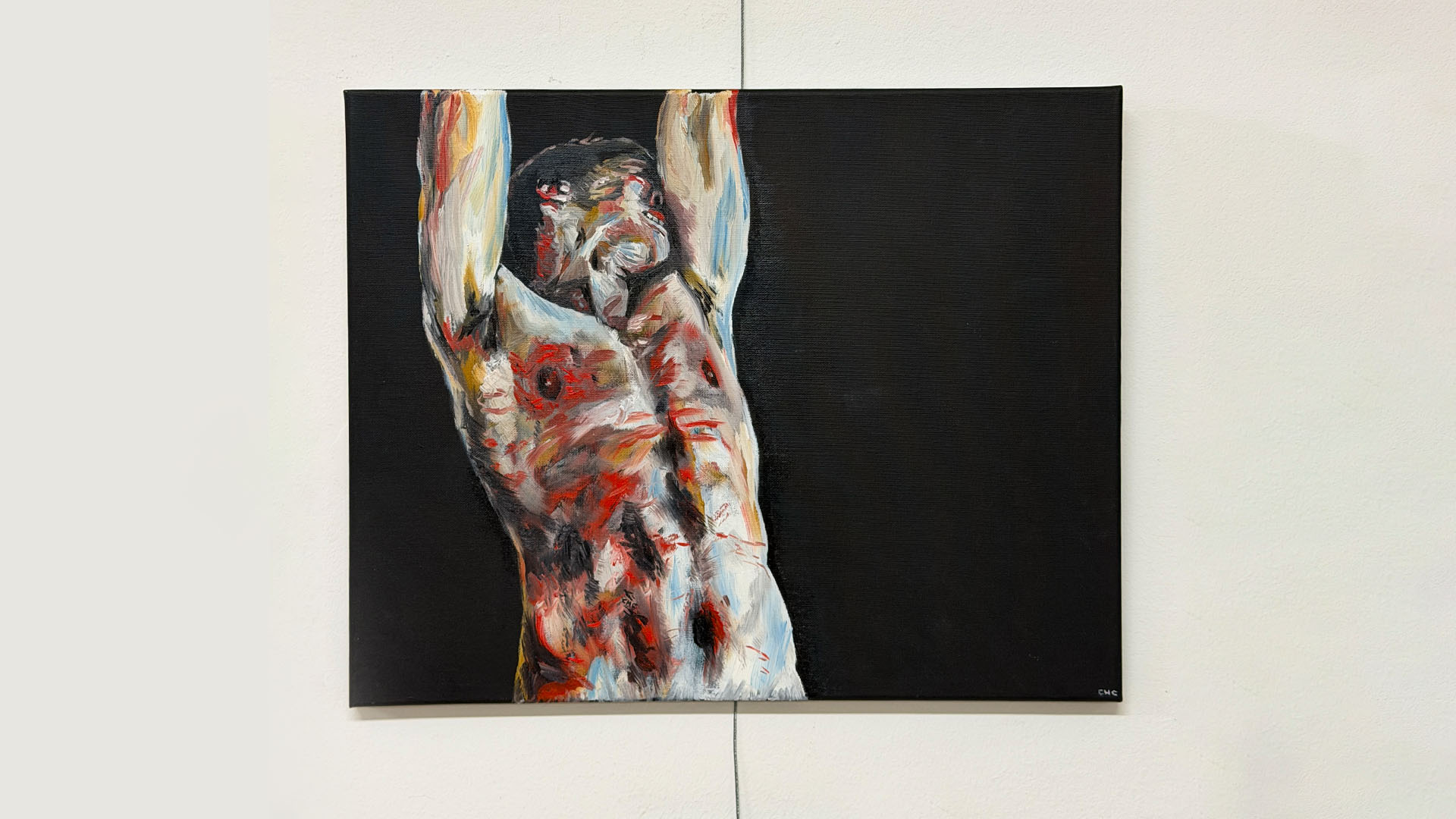
Chris Hughes Copping presented Thud / Sting (2025), an oil on canvas painting depicting the torso of a naked man set against a black background. The body appears pale, marked with deep reds that suggest impact beneath the skin. Hughes Copping described the work as engaging with impact play and BDSM, sitting deliberately between pleasure and pain. The subject’s face is partly obscured, leaving uncertainty around what the figure is experiencing. He explained that the ambiguity is intentional, allowing viewers to confront their own assumptions around consent, endurance, and intensity, and how such experiences can stay with the body beyond the visible moment.

BadenClare presented The Fabric of Intimacy 1/3 (2025), a photographic work inspired by the first card of the Major Arcana, The Magician. The image places a figure in a black latex bodysuit alongside soft, classical drapery, creating tension between gloss and fabric, concealment and exposure. BadenClare spoke about his practice as drawing from folklore, spirituality, and fetish culture, using texture and styling to explore how masculinity is shaped and performed. The work treats masculinity as something constructed through belief and ritual rather than something stable or inherited.
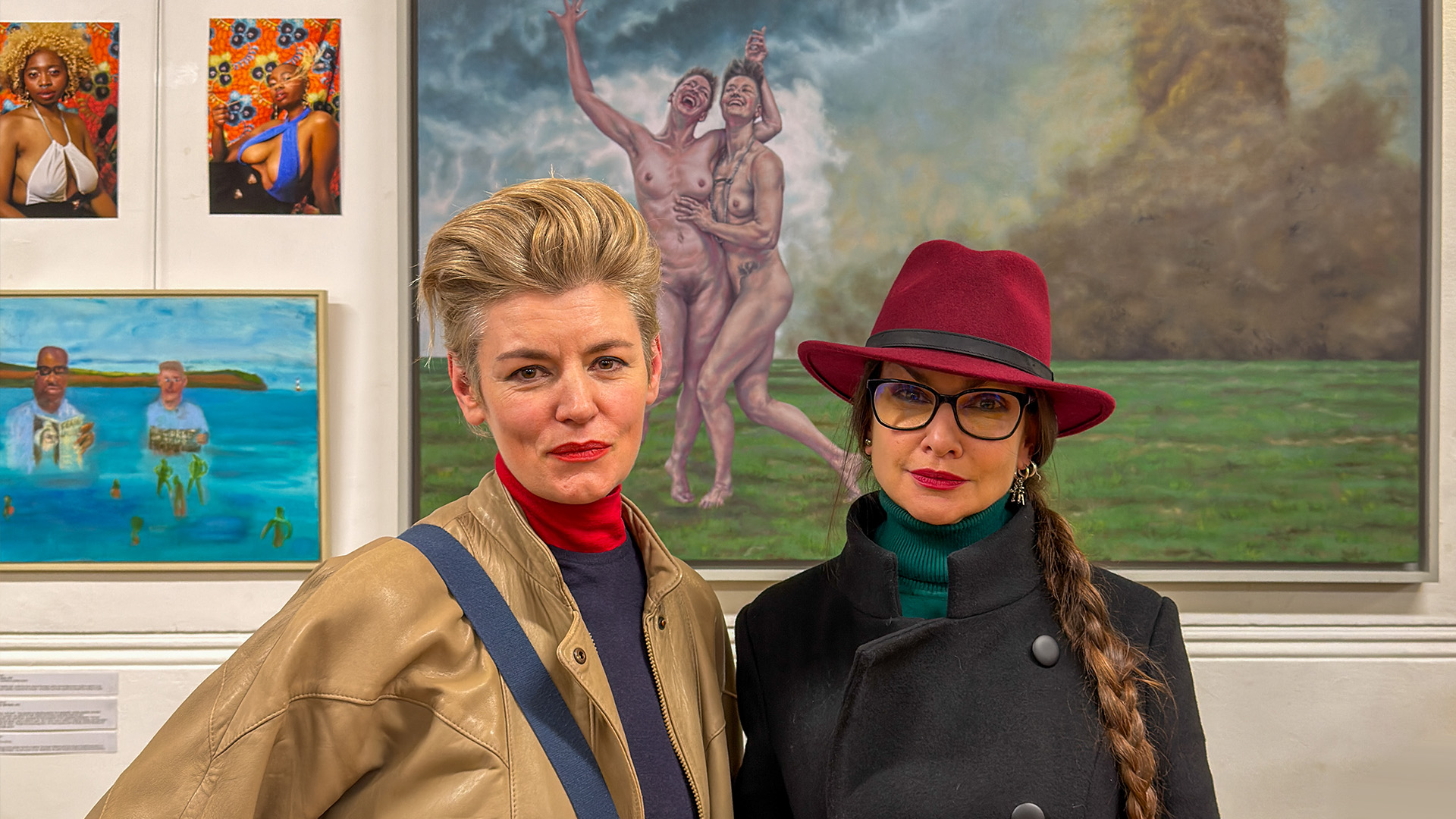
Roxana Halls showed Laughing While Braving (2023) alongside Dancing on My Own (2000). Speaking about her work, Halls described her interest in creating scenes that resist clear interpretation. In Laughing While Braving, figures appear in front of an approaching tornado, suspended between danger and movement. Halls spoke about laughter as a form of refusal rather than comfort, and about placing women in moments of risk as a way of thinking about freedom, disruption, and agency. Her work does not resolve these moments, instead leaving space for viewers to project their own experiences onto the scene.
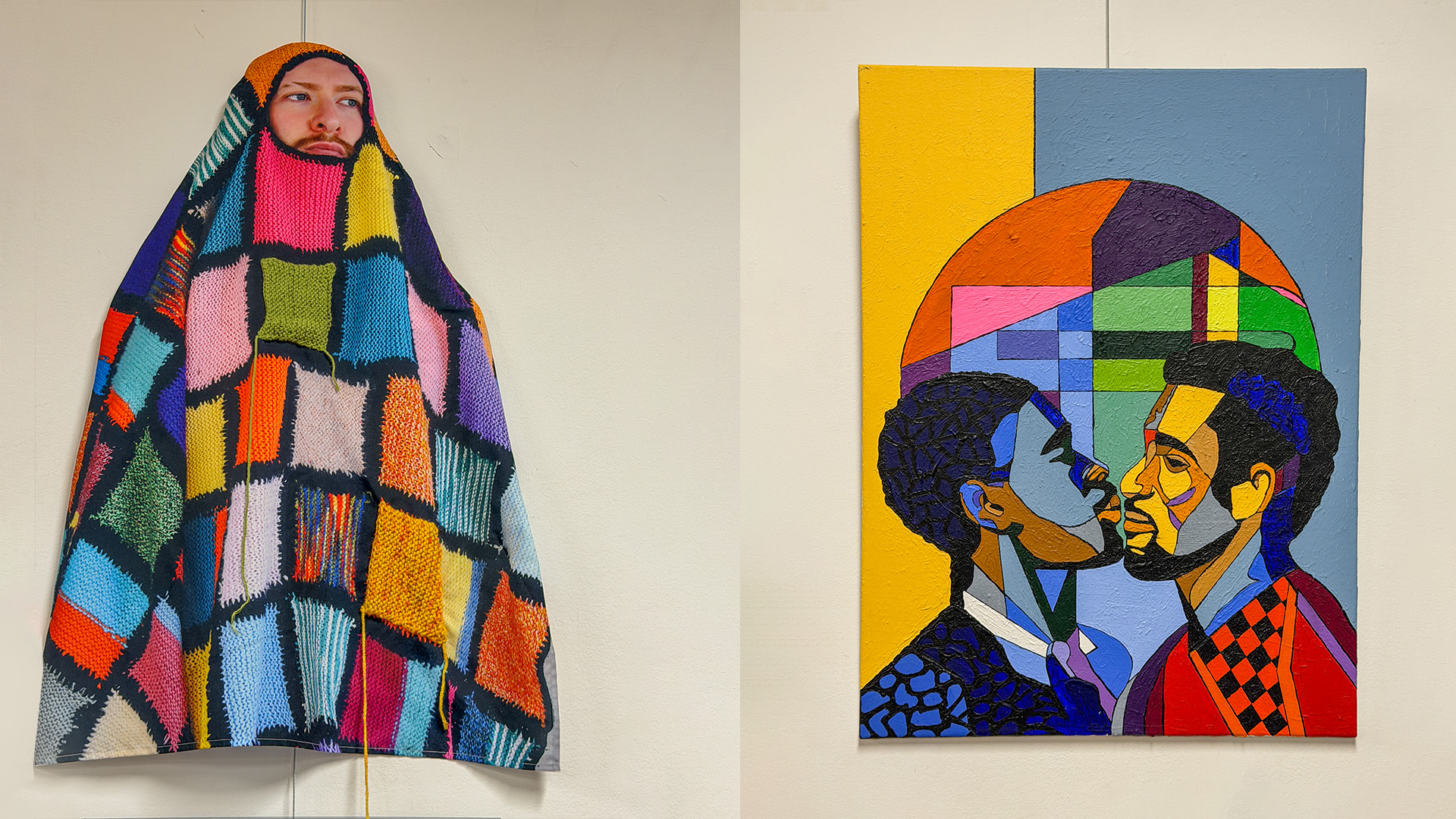
Xavier White’s own works are distributed throughout the exhibition and often function as points of interaction rather than isolated objects. Injections of Hope and Other Side Effects (2025), a 3D lenticular self portrait, shifts between two images as the viewer moves. One shows the artist clothed and surrounded by symbols associated with queer identity and aspiration, while the other reveals the body pierced by syringes against a backdrop of medication. The work draws on White’s personal experience of chronic illness and sepsis, focusing on the physical and emotional impact rather than offering a neat narrative of recovery.
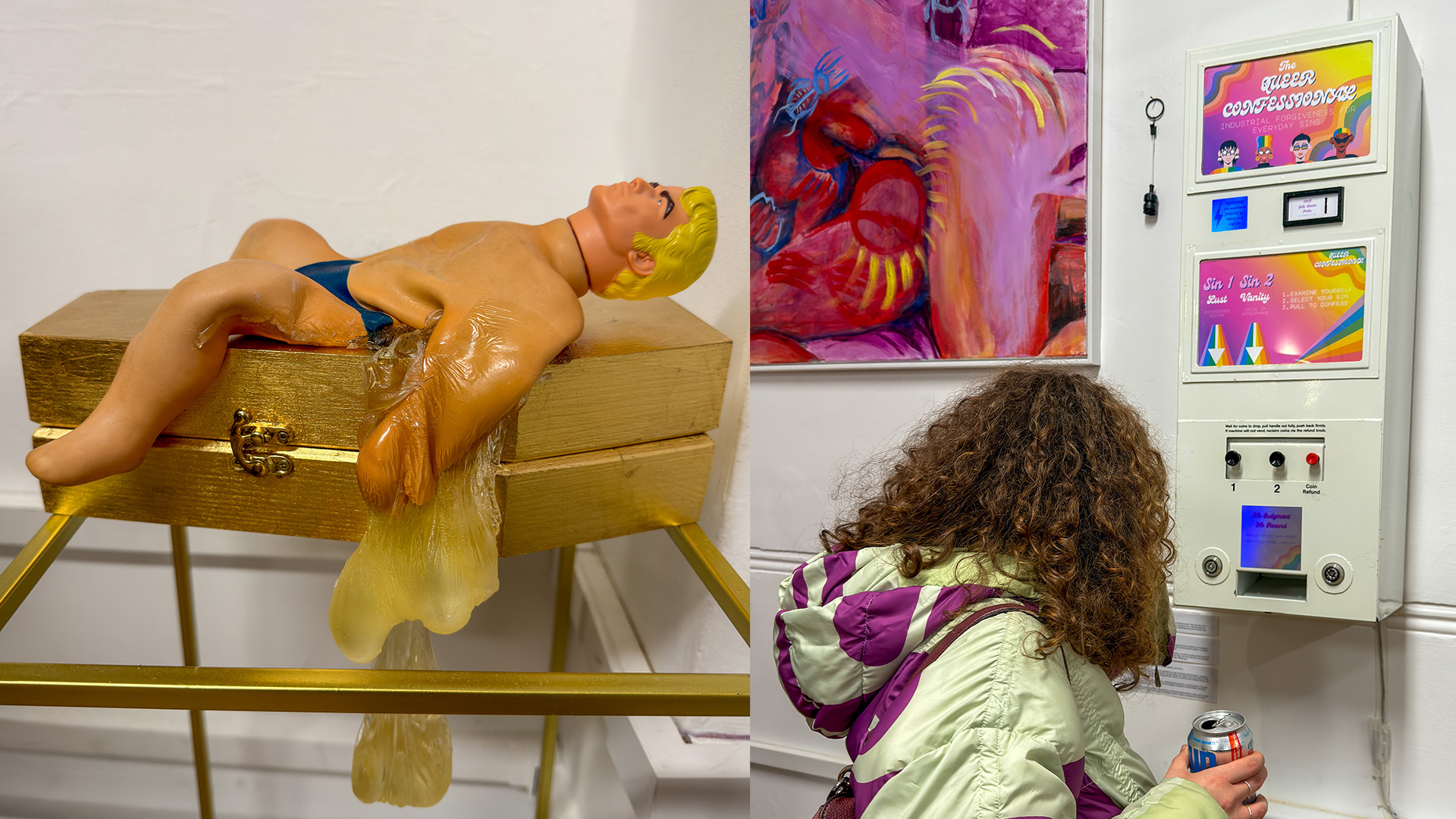
Queer Confessional (2026) repurposes a condom vending machine as a space for ritualised self examination, referencing Catholic confession while removing absolution. In Please Wipe Your Feet on Me, The Rest of Society Already Does (2026), a printed doormat placed at the entrance requires visitors to step onto the artist’s face in order to enter, turning an everyday gesture into a reminder of repeated, normalised harm. Other works, including Pain Part III (2020–2026), Poposal (Unpopped) (2025), Gold Standard Masculinity (2026), and the flashing signage installation, address medical trauma, delayed queer milestones, and the pressures of idealised masculinity.
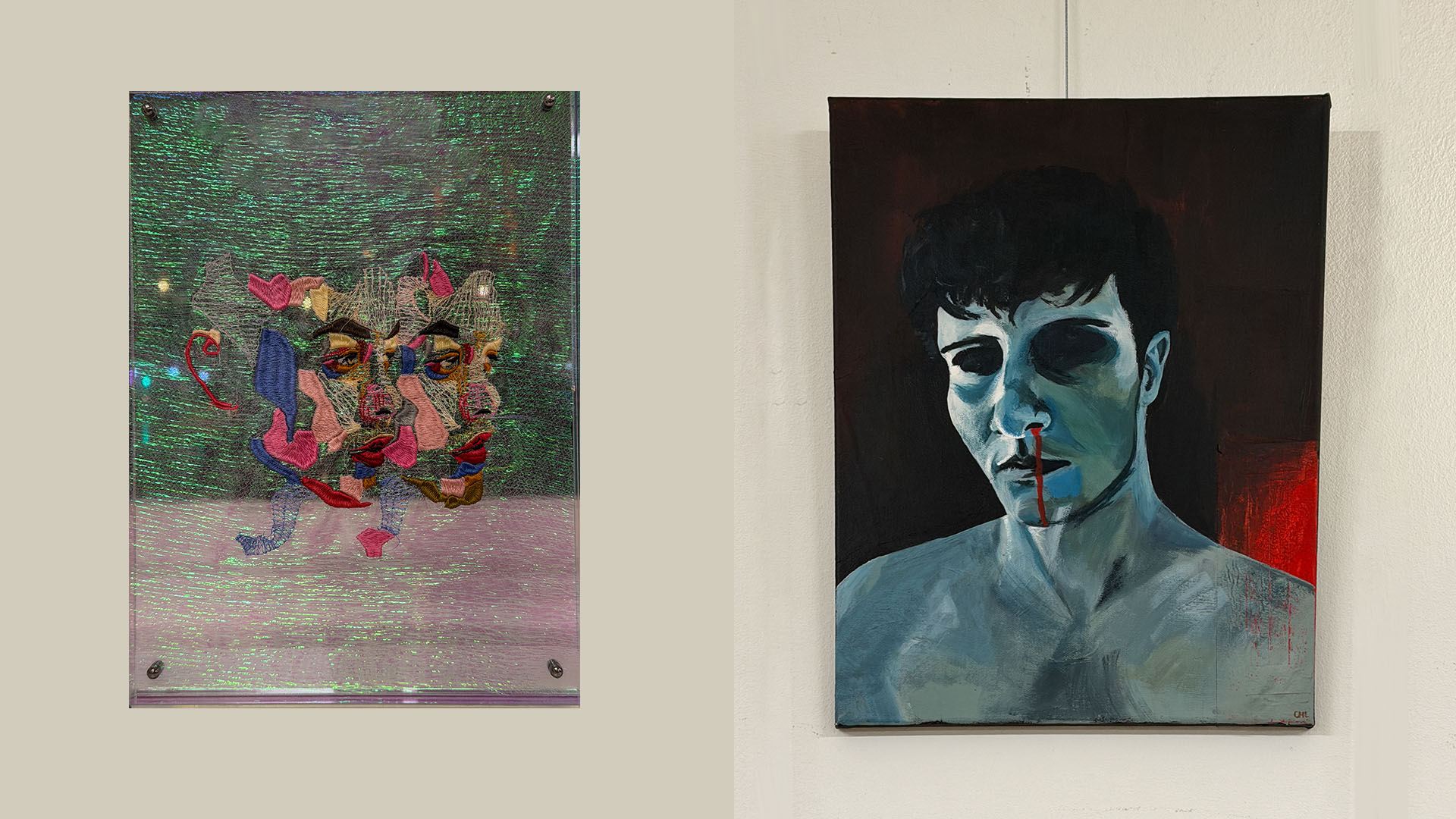
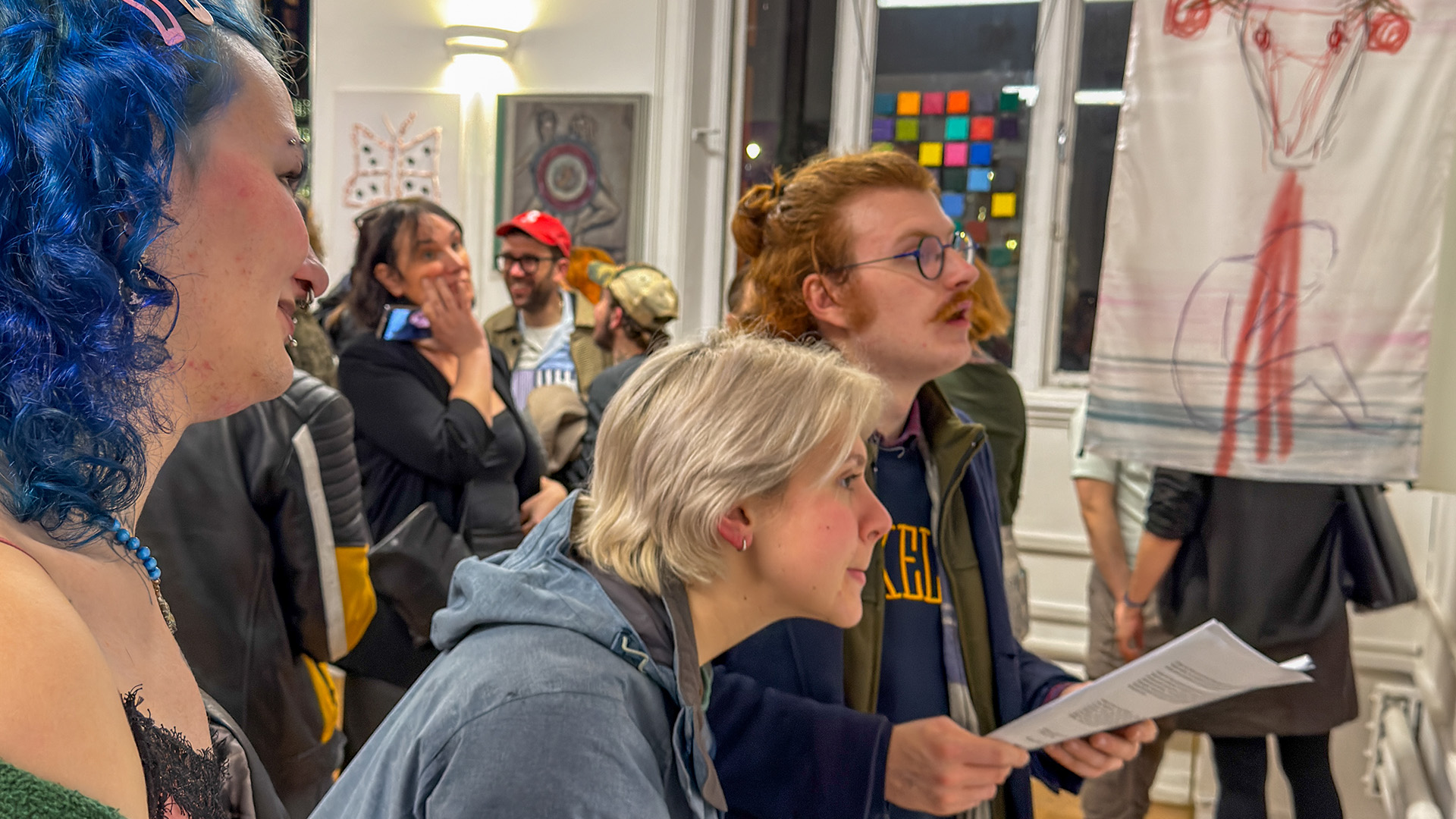
It was genuinely good to have the opportunity to see so many different artists and perspectives brought together in one place, and to encounter this work in a space that people use every day for reasons unrelated to art.
Under Our Skin showed how much depth and care exists across queer artistic practice, and how valuable it is to see these conversations taking place openly and collectively. What came through clearly, both in the panel discussion and in the work itself, is that this kind of exhibition should happen more often, rather than being tied only to specific moments such as LGBTQ+ History Month.

.svg)


Get weekly updates
Follow us -
@theFLICKERMAGAZINE


.png)
Join Our Newsletter
Get a weekly selection of curated articles from our editorial team.
Join Our Newsletter
Get a weekly selection of curated articles from our editorial team.