


Hit Enter to Search or X to close
American Psycho review at the Almeida Theatre
Rupert Goold revisits the musical that opened his time at the Almeida, revealing how its satire now sits uncomfortably close to the present
American Psycho review at the Almeida Theatre

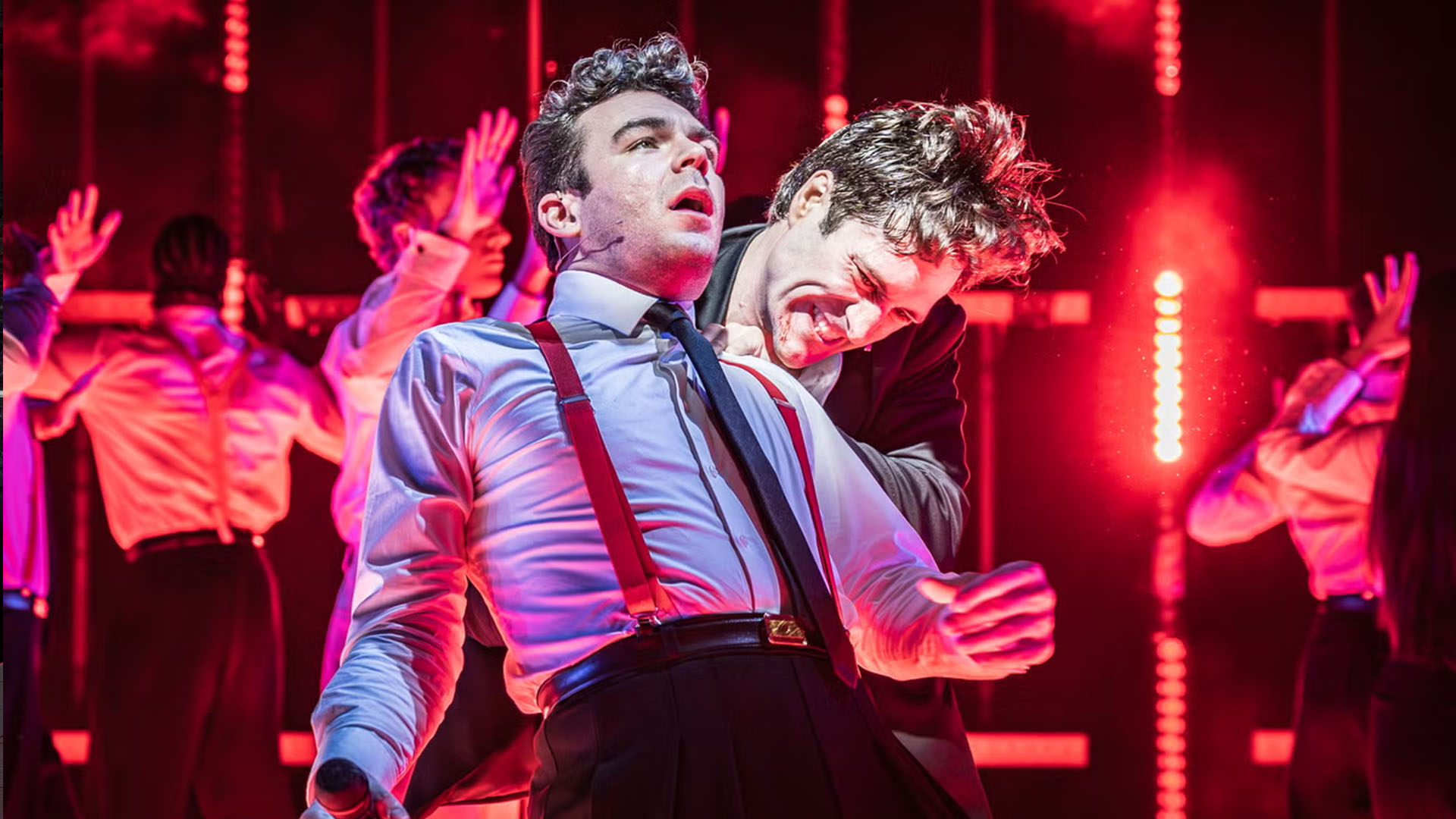
American Psycho reopens at the Almeida Theatre as both a return and a closing chapter. First staged here in 2013, the musical now marks the final production of Rupert Goold’s tenure at the theatre. Time has altered the material. What once read as heightened satire now sits closer to the surface of everyday life.
Based on American Psycho, the story follows Patrick Bateman, a Wall Street banker whose fixation on status, image, and control fractures into violence. The revival does not push for topical commentary. It relies instead on accumulation. Brand names, routines, conversations, gestures. The world Bateman moves through feels sealed, repetitive, and increasingly airless.
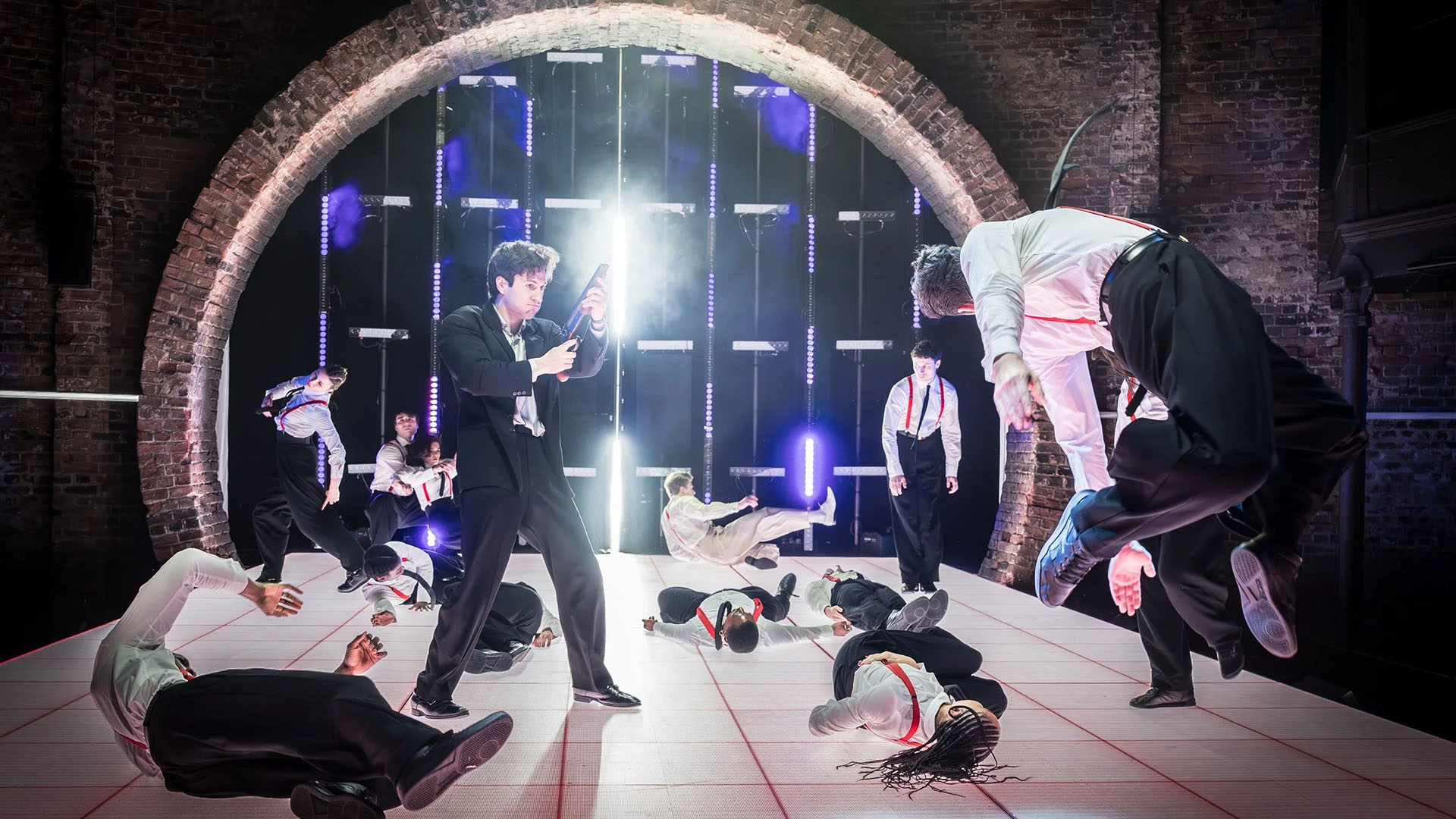
The Almeida space is configured as a long thrust, cutting through the audience and turning the stage into a hybrid of runway and containment zone. Es Devlin’s design keeps physical scenery minimal, allowing light and projection to define location and mood. Video by Finn Ross floods the floor with shifting patterns that register as nightlife, data, blood, or distortion, often without settling on a single meaning. Jon Clark uses glare and stark contrast to keep the environment exposed rather than atmospheric.
Movement plays a central role. Lynne Page builds sequences from repetition and symmetry. Men in suits move in formation. Gestures recur. Postures mirror one another. The effect is orderly and aggressive at once, presenting bodies as interchangeable units within a system that values surface above individuality.
At the centre, Arty Froushan plays Patrick Bateman with restraint. His performance avoids excess, focusing instead on control under pressure. Early scenes establish a polished exterior that gradually tightens, then frays. The physical cost of maintaining composure becomes visible as the production progresses. Rather than pushing Bateman toward caricature, the portrayal keeps him functional, watchful, and increasingly strained.
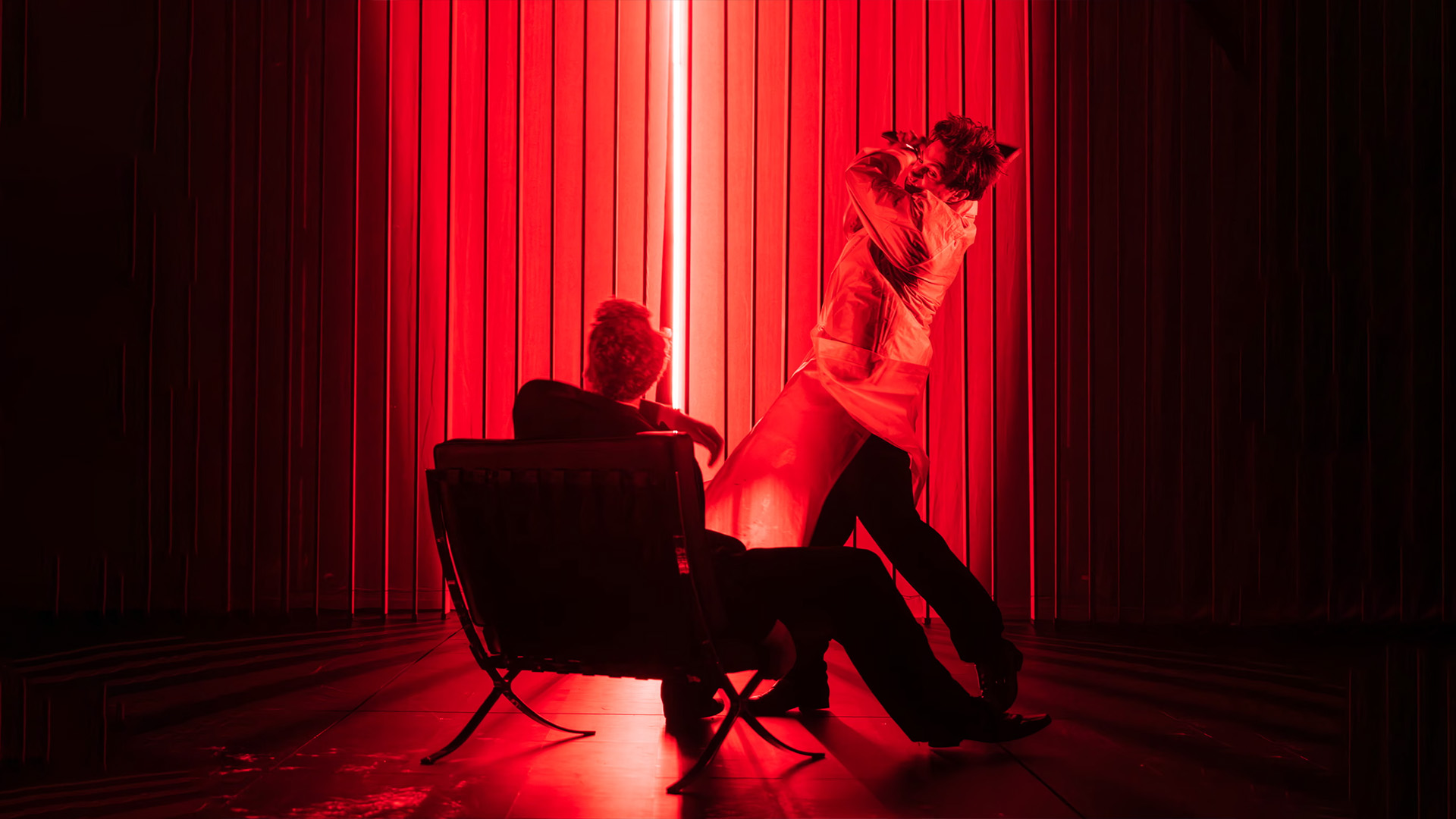
The supporting cast reinforces the sense of sameness that defines Bateman’s environment. Colleagues blur together, their competitiveness expressed through status markers rather than personality. Within this, Anastasia Martin’s Jean stands apart. Her presence is quieter, grounded, and observant, offering a counterpoint without interrupting the system that surrounds her.
The music resists traditional musical release. Duncan Sheik’s score relies on electronic textures that sustain tension rather than resolve it. Familiar songs from the period surface briefly, stripped of nostalgia and folded into the production’s controlled tone. Numbers do not function as escape. They operate as extensions of the environment Bateman inhabits.
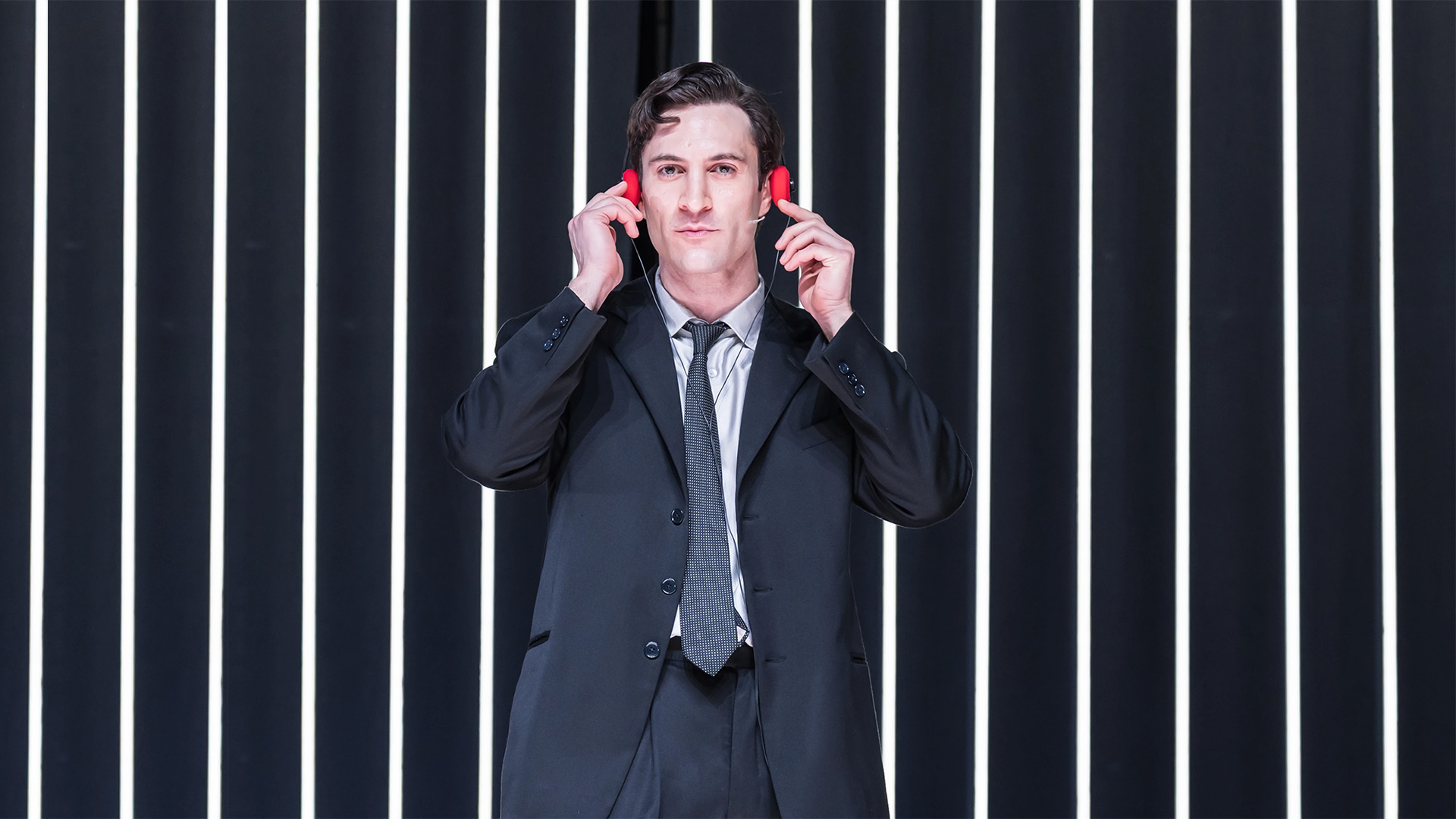
Violence is suggested more often than shown. The revival shifts focus away from spectacle toward implication and ambiguity. Events are repeated, denied, or reframed. Names slip. Memory proves unreliable. The production avoids clarifying what has taken place, allowing uncertainty to sit alongside routine.

As a revival, American Psycho does not attempt reinvention. It sharpens what was already present. As a final statement at the Almeida, it reads as measured rather than grand. The production closes without resolution, leaving Bateman intact within a world that continues to reward surface, repetition, and control.
American Psycho runs at the Almeida Theatre until 14 March 2026.

.svg)



Get weekly updates
Follow us -
@theFLICKERMAGAZINE


.png)
Join Our Newsletter
Get a weekly selection of curated articles from our editorial team.
Join Our Newsletter
Get a weekly selection of curated articles from our editorial team.