


Hit Enter to Search or X to close
Why family rejection is the starting point of LGBTQIA+ homelessness
Why family rejection is the starting point of LGBTQIA+ homelessness

Why family rejection is the starting point of LGBTQIA+ homelessness


This article appears in Flicker F*3 Issue and forms part of the magazine’s ongoing focus on queer life, safety, and survival.
Rejection Comes First
LGBTQIA+ homelessness does not begin with housing loss. It begins with rejection. Not the kind that triggers police involvement or emergency intervention, but the quieter forms that undermine safety over time and leave no official record.
For many LGBTQIA+ people, homelessness starts inside the home. Family rejection framed as concern. Control presented as care. Religious or moral pressure delivered as love. Financial support withdrawn without explanation. Silence used as punishment. Being told to leave without notice, documentation, or any formal eviction that would ever appear in a local authority file. By the time someone presents as homeless, the system treats the situation as sudden. In reality, the harm has often accumulated gradually. The outcome is recorded. The cause remains unrecognised.
When Family Turns Conditional
Family rejection is one of the most consistent drivers of LGBTQIA+ homelessness in the UK. It rarely occurs as a single rupture. More often, it develops incrementally. Hostility increases. Boundaries tighten. Affection becomes conditional. Identity becomes the problem to be managed. This form of harm is routinely minimised because it does not align with how violence is typically defined within housing and safeguarding frameworks. Emotional abuse is dismissed as disagreement. Coercion is reframed as family conflict. Risk is overlooked because it leaves no visible mark. For LGBTQIA+ people, particularly young people, the message is clear. You can stay, but not as yourself. Leaving becomes a survival decision rather than a lifestyle choice, yet it is rarely recognised as such by statutory systems.
Harm Without Proof
Homelessness assessments in the UK rely heavily on evidence that can be formally documented. Eviction notices. Police reports. Medical records. Proof that harm occurred in ways the system already knows how to measure.
LGBTQIA+ rejection rarely produces this kind of evidence. Pressure to suppress identity does not generate paperwork. Living in a home where acceptance is conditional does not trigger safeguarding alerts. Fear that builds gradually is difficult to evidence within standard assessment frameworks. As a result, many LGBTQIA+ people are assessed as low risk at precisely the moment their safety is most fragile. When they leave, this is frequently recorded as a voluntary decision. The system does not ask what made staying unsafe.
What Never Gets Counted
Sexual orientation and gender identity are not consistently recorded when people present as homeless. Disclosure is optional, and many choose not to disclose because it offers no clear protection and may increase risk. This creates a self-reinforcing cycle. Under-recording leads to under-recognition. Under-recognition leads to underfunding. Underfunding reinforces the perception that the issue is marginal.
Despite this, specialist charities consistently report that LGBTQIA+ people are overrepresented among those experiencing hidden homelessness, including sofa surfing and insecure arrangements that fall below statutory thresholds. These are not anomalies. They are the predictable outcome of a system that only counts what it is designed to see.
Where Risk Goes Next
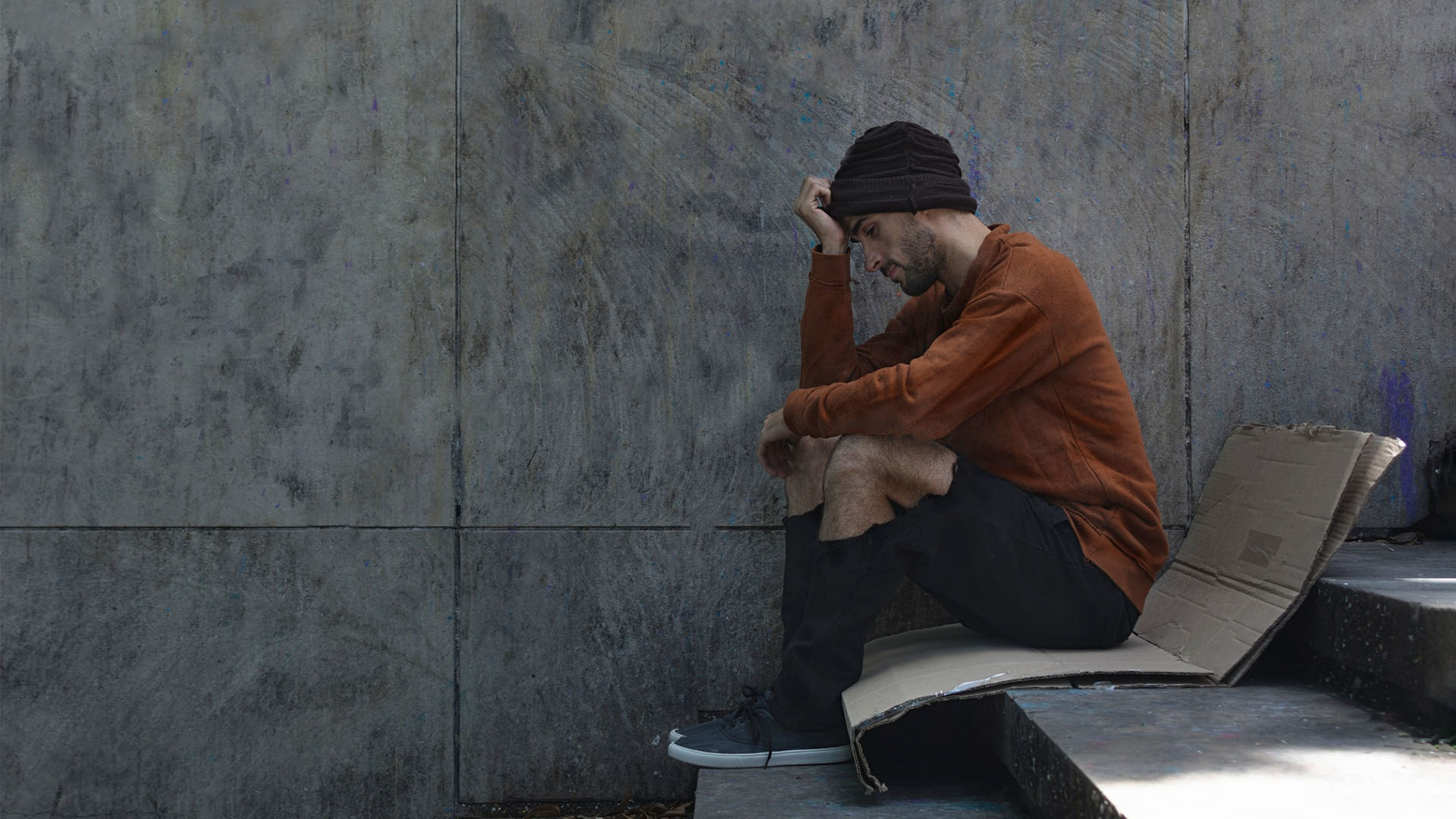
When home ceases to function as a place of safety, risk does not disappear. It relocates. Street homelessness concentrates existing vulnerability rather than creating it. Visibility increases. Isolation deepens. Protection becomes informal and conditional. Trans people face heightened risk linked directly to gender expression. Queer men report sexual exploitation framed as exchange or opportunity. Queer women and non-binary people are frequently overlooked altogether. Harm in these settings follows clear patterns. Who is visible. Who is isolated. Who lacks protection. The street does not create vulnerability. It organises it through exposure and imbalance of power.
Safety, Conditional
Emergency accommodation is often presented as the solution, yet placements are frequently determined by availability rather than suitability. Safety is negotiated after arrival rather than assured in advance. Gender-segregated hostels prioritise documentation over lived identity. Protection depends on staff discretion rather than enforceable standards. Training is inconsistent. Accountability mechanisms are limited. Trans and non-binary people are forced into untenable choices between misgendering and exclusion. When individuals disengage to protect themselves, this is often recorded as non-compliance. Survival is reframed as failure to engage.
Punished for Coping
Substance use frequently appears in homelessness assessments as a barrier to housing progression. For LGBTQIA+ people, it is more accurately understood as a response to prolonged instability, rejection, and fear. Drugs and alcohol numb distress, manage exhaustion, and offer temporary belonging. In street settings, they can also function as protection. Yet many housing pathways continue to require abstinence as a condition of access. Relapse resets eligibility. Support is withdrawn. People are returned to the street. This is not recovery-led practice. It is conditional support that penalises coping strategies.
If home feels unsafe, help exists. You do not have to navigate this alone.
Disappearing on Paper
Many LGBTQIA+ people choose not to disclose their identity within homelessness services, not because it is irrelevant, but because it feels unsafe. This invisibility is often framed as personal choice rather than structural consequence, despite shaping every stage of response. Data informs funding. Funding shapes services. Services determine who is protected. When LGBTQIA+ homelessness remains under-recorded, it remains under-prioritised. Absence becomes justification.
Causes We Already Know
The causes of LGBTQIA+ homelessness are well established. Family rejection without safeguarding response. Data systems that erase identity. Prevention models that treat identity as negotiable. Housing pathways that penalise trauma responses. The solutions are equally well evidenced. LGBTQIA+ specific provision. Trauma-informed assessment. Housing First approaches. Support models that do not require people to prove worthiness. Where these exist, outcomes improve and stability lasts. They remain marginal because the causes they address remain politically uncomfortable.
The Question
LGBTQIA+ homelessness is not accidental. It is produced when being yourself becomes unsafe and the system has no mechanism to record that risk. Before asking why someone left, why they cannot return, or why they did not comply, there is one question that matters more than all others. What made staying unsafe. Until unsafe homes are recognised as a form of displacement, LGBTQIA+ homelessness will continue to be treated as an exception rather than a consequence.
Where to Find Support in the UK
If this article reflects your experience, support is available.
• Albert Kennedy Trust. Support for LGBTQI+ people aged 16 to 25 facing homelessness or unsafe housing.
• Stonewall Housing. Housing advice, advocacy, and supported accommodation for LGBTQI+ people, based in London.
• Shelter. Free, confidential housing advice for anyone facing homelessness or unsafe accommodation.
• Centrepoint. Support for young people experiencing homelessness, including LGBTQI+ young people.
• Switchboard . Confidential listening support for LGBTQI+ people, including those in crisis or unsafe situations.


.svg)



Get weekly updates
Follow us -
@theFLICKERMAGAZINE


.png)
Join Our Newsletter
Get a weekly selection of curated articles from our editorial team.
Join Our Newsletter
Get a weekly selection of curated articles from our editorial team.