


Hit Enter to Search or X to close
The Black Ball review: Lorca's unfinished play becomes a queer epic of longing and loss
Federico García Lorca's unfinished play becomes the heart of an epic spanning Republican Spain, fascist violence and the present. One of Cannes 2026's most celebrated premieres.
Federico García Lorca's unfinished play becomes the heart of an epic spanning Republican Spain, fascist violence and the present. One of Cannes 2026's most celebrated premieres.










The Black Ball review: Lorca's unfinished play becomes a queer epic of longing and loss

Spanning Republican Spain, fascist violence and the present day, Javier Calvo and Javier Ambrossi craft one of Cannes' most emotional films
Seldom does a story stretching across almost a century find its emotional continuity interrupted by the unmistakable whistle of a Grindr notification. Yet in The Black Ball (La Bola Negra), directors Javier Calvo and Javier Ambrossi collapse generations of queer Spanish history into a single epic cinematic reckoning, where unfinished art, buried desire and historical trauma bleed into one another.
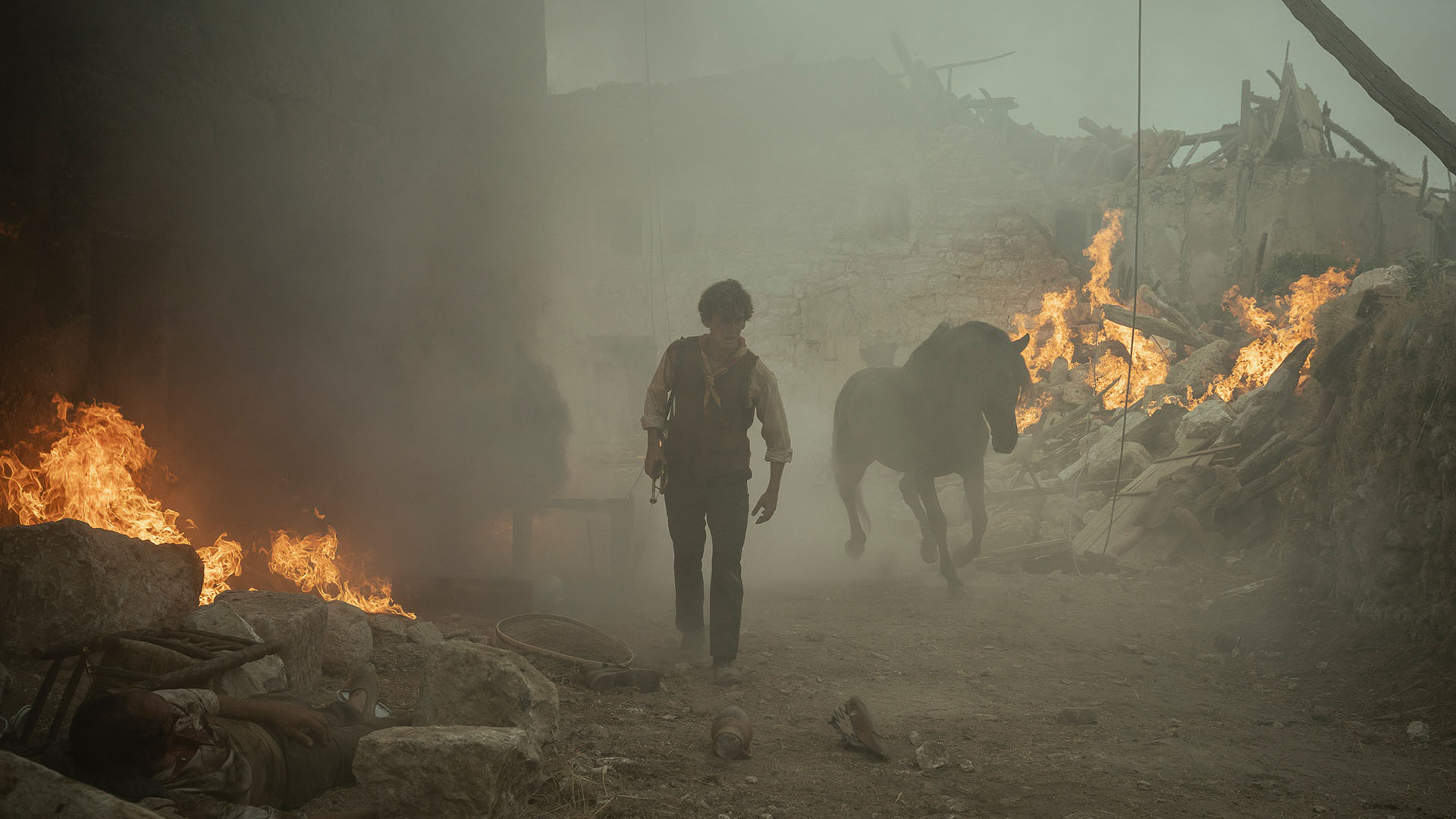
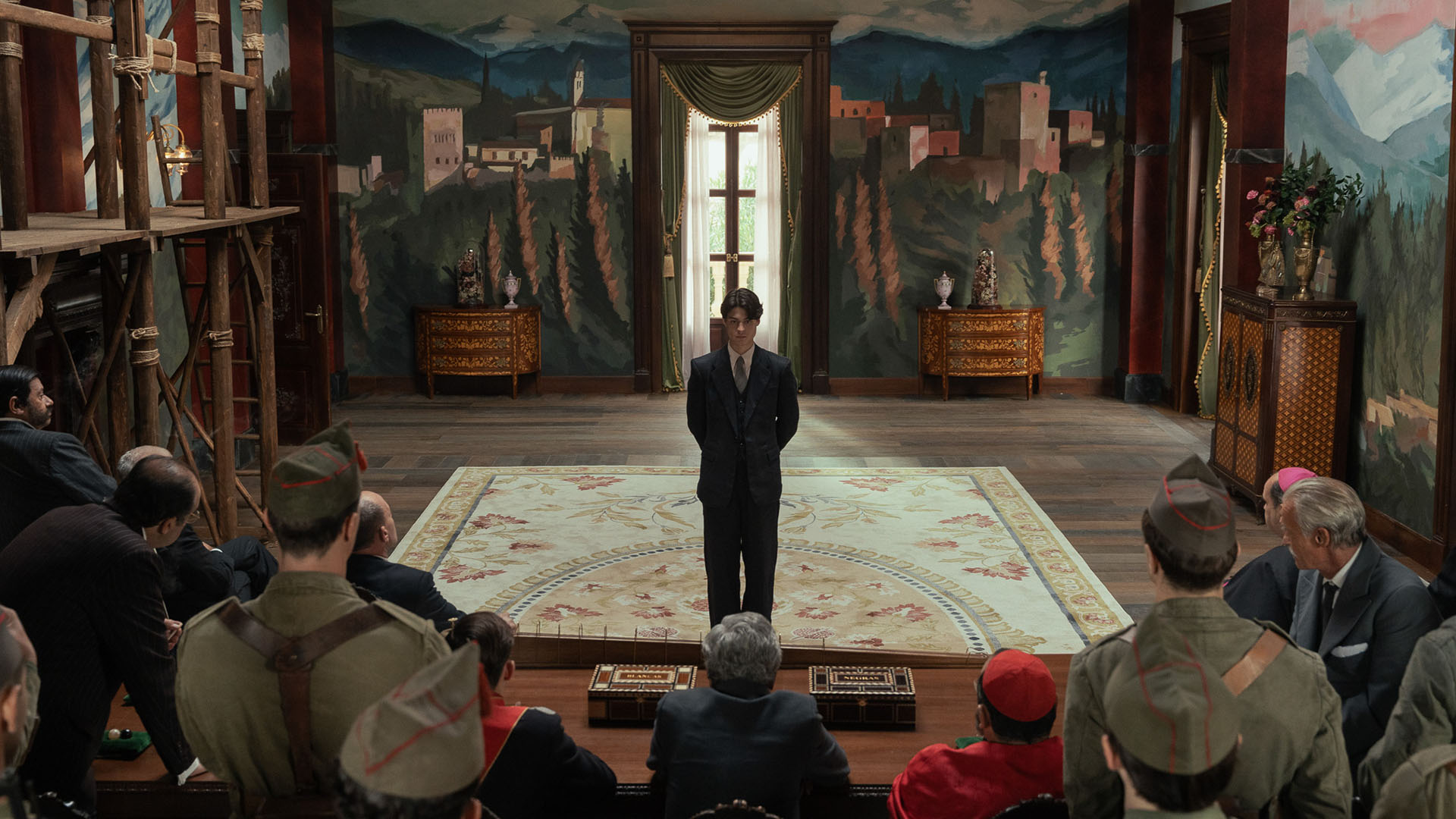
Moving through 1937, 1932 and 2017 without treating time as stable, the feature begins with Sebastián (Guitarricadelafuente), a young trumpeter whose village awaits the arrival of Mussolini's forces as liberators, only to be bombed by the very planes they welcomed. Pulled into the fascist violence himself in the chaos that follows, Sebastián's story connects across decades to Alberto (Carlos González), who uncovers his connection to men erased by silence and history. Between them sits 1932 Granada, where Carlos (Milo Quifes), the son of a wealthy businessman, seeks membership in the Casino whose members vote with white balls for acceptance and black balls, la bola negra, for rejection. His homosexuality is an open secret, and the vote turns queerness into ceremony, humiliation into procedure.
Only gradually does this Granada strand reveal itself as the unfinished play, The Black Ball, by Federico García Lorca, the legendary Spanish poet and playwright assassinated by Francoist forces in 1936 before he could complete it. That revelation changes the shape of everything around it. What first appears to be another historical thread becomes a work of art coming alive before us, asking for the ending history denied it.
Black-and-white sequences featuring Federico García Lorca (Alberto Cortés) and Rafael Rodríguez Rapún (Miguel Bernardeau), Lorca's companion, actor, football player and future Republican soldier, surface like memories struggling to preserve themselves. Miguel Bernardeau's striking physicality perfectly suits a work so preoccupied with masculine beauty, desire and mortality. Lorca tells Rafael he is writing The Black Ball "about people like us" and insists there "won't be a gram of poetry in it," an ironic impossibility for a writer incapable of escaping lyricism.
Plenty of queer poets and writers have received cinematic afterlives, from Siegfried Sassoon in Benediction to W. H. Auden and James Baldwin. What makes The Black Ball unusual is that Lorca's play exists unfinished in real life, abandoned before his assassination in 1936. Calvo, Ambrossi and co-screenwriter Alberto Conejero turn the drama into a meditation on how the play might have ended, while gradually giving the fragment itself the texture of a living character: vulnerable, desired, endangered and passed between generations of men trying to keep one another from disappearing.
That inheritance becomes flesh through Rafael and Sebastián. Rafael, Lorca's former companion and an anti-fascist Republican soldier, is imprisoned by the forces Sebastián has been made to serve. Sebastián becomes his guard, placing them on opposite sides of history before intimacy can even begin. What unfolds between them is understated yet devastatingly beautiful: an accumulation of glances, silences and gestures between a man carrying Lorca's memory and another still trapped inside the machinery that helped destroy it. When Rafael entrusts Sebastián with the unfinished manuscript, the act becomes the passing of desire, testimony and responsibility from one endangered man to another.
Most striking is the way desire emerges inside spaces dominated by violence, militarism and masculine performance. Young men flood nearly every frame: soldiers, sailors, bathers, trumpet players, laborers. The camera traces their bodies with unmistakable sensuality, lingering on nude figures swimming and bathing on beaches, shaving beside one another, wrestling and posturing with the confidence and carelessness of youth. Fireworks erupt overhead, illuminating skin and water in rhythmic pulses of light, transforming male camaraderie into something suspended between erotic longing and impending catastrophe.
Even the image of Saint Sebastian returns this tension to the body. Early on, Sebastián escapes into a ruined church and climbs a shattered statue of the pierced martyr, whose wounded form has long carried homoerotic charge. The parallel between the saint and the young man sharing his name gives the epic one of its clearest images: beauty, violence and desire locked together in the same pose.
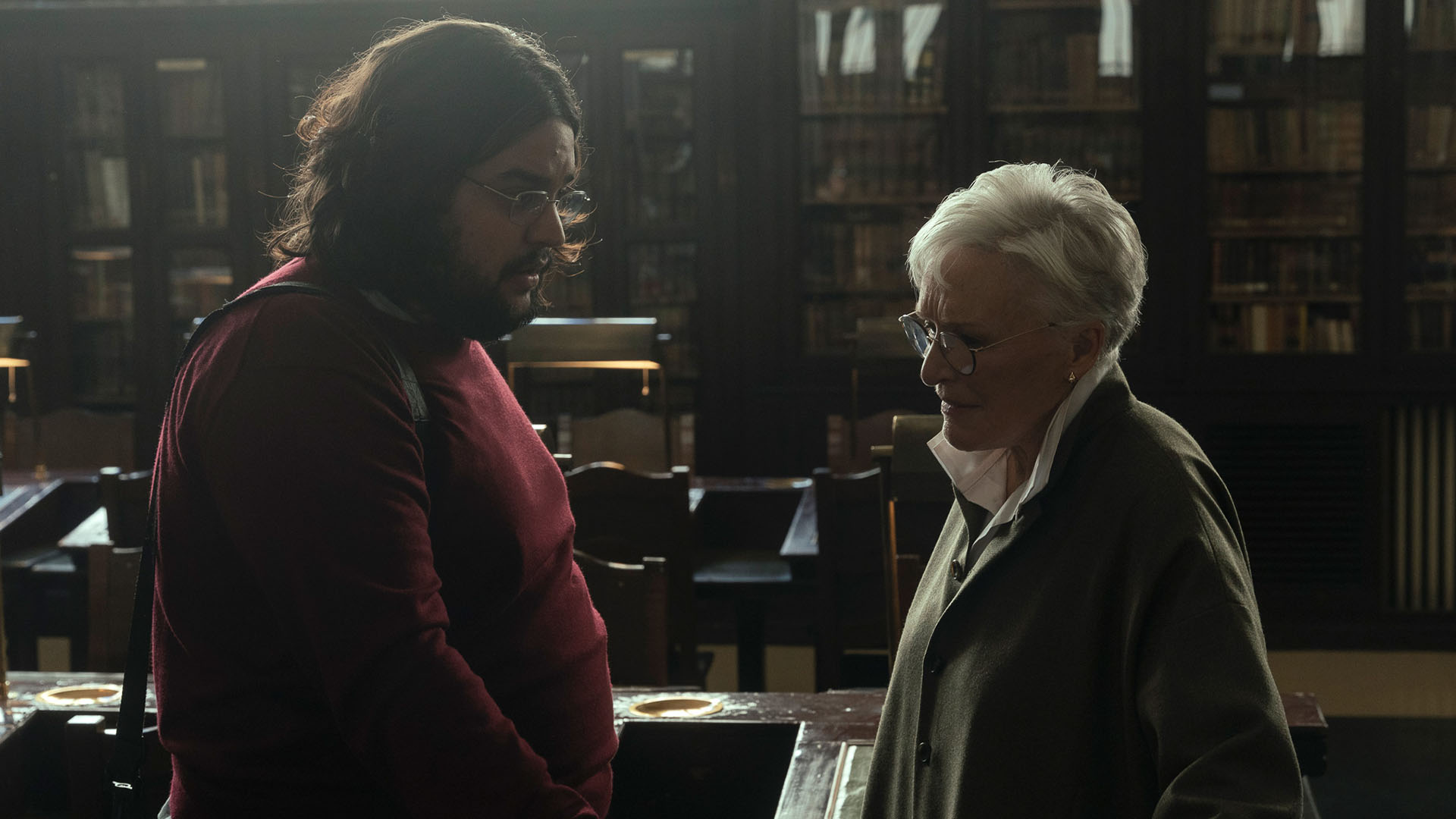
Glenn Close's American Lorca scholar and Penélope Cruz's almost mythic Mother Nature figure push the story further into self-aware meditation, turning the question of the play's ending into something unstable, interpretive and openly constructed.
Visually, The Black Ball matches the sweep of its ideas. From the light-bathed streets of Granada in the South to the beaches of Santander in the North, where youthful men move through water and firelight with aching vitality, the cinematography gives each strand its own emotional texture. Madrid, ruined villages, forests and mountains carry the weight of history without losing their sensual immediacy. The score rises to meet that scope, swelling with the kind of romantic melancholy that understands longing and catastrophe as inseparable forces. Calvo and Ambrossi transform Lorca's unfinished play into a cinematic excavation of queer histories erased by fascism and time, asking not simply how The Black Ball might have ended, but what desires, futures and lives were interrupted alongside it. By the final stretch, they achieve something rare in contemporary queer cinema: an emotional register entirely unafraid of grand feeling. Like All of Us Strangers before it, The Black Ball feels destined to reduce many viewers to tears. Hands down, it is one of the very best titles to emerge from the 2026 Cannes Film Festival, ending on the kind of yearning that almost makes reinstalling Grindr seem romantic again.

Director: Javier Calvo, Javier Ambrossi
Writer: Javier Calvo, Javier Ambrossi, Alberto Conejero
Cast: Guitarricadelafuente, Miguel Bernardeau, Carlos González, Milo Quifes, Lola Dueñas, Penélope Cruz, Glenn Close
Production: Suma Content Films, Los Esquiadores A.I.E., Movistar Plus+, El Deseo, Le Pacte
Running Time: 155 minutes
Rating: 4.5/5


.svg)




Get weekly updates
Follow us -
@theFLICKERMAGAZINE


.png)
Join Our Newsletter
Get a weekly selection of curated articles from our editorial team.
Join Our Newsletter
Get a weekly selection of curated articles from our editorial team.