


Hit Enter to Search or X to close
Wilder play review by Thomas Billiouw and Dany Van Brabant
Newport is a town where garden club invitations feel like threats. A polished marriage begins to unravel when the neighbours refuse to leave.
Wilder play review by Thomas Billiouw and Dany Van Brabant

Wilder arrives at Etcetera Theatre with the confidence of a show that knows exactly what it wants to be. From the opening moments, it establishes a world driven by control, desire, and carefully maintained appearances. The energy is fast and playful, deliberately excessive without ever feeling scattered. Even when the action tips into chaos, the story holds together as a single experience rather than a chain of comic moments.
Created by Thomas Billiouw and Dany Van Brabant, the play has been shaped over several years. It first appeared in a smaller form in Paris before being reworked and refined for London. That process shows in the clarity of tone and the confidence of the staging. This feels like a piece that has been tested and sharpened, not rushed into performance. There is ease in how the show moves, as if it trusts both itself and its audience.
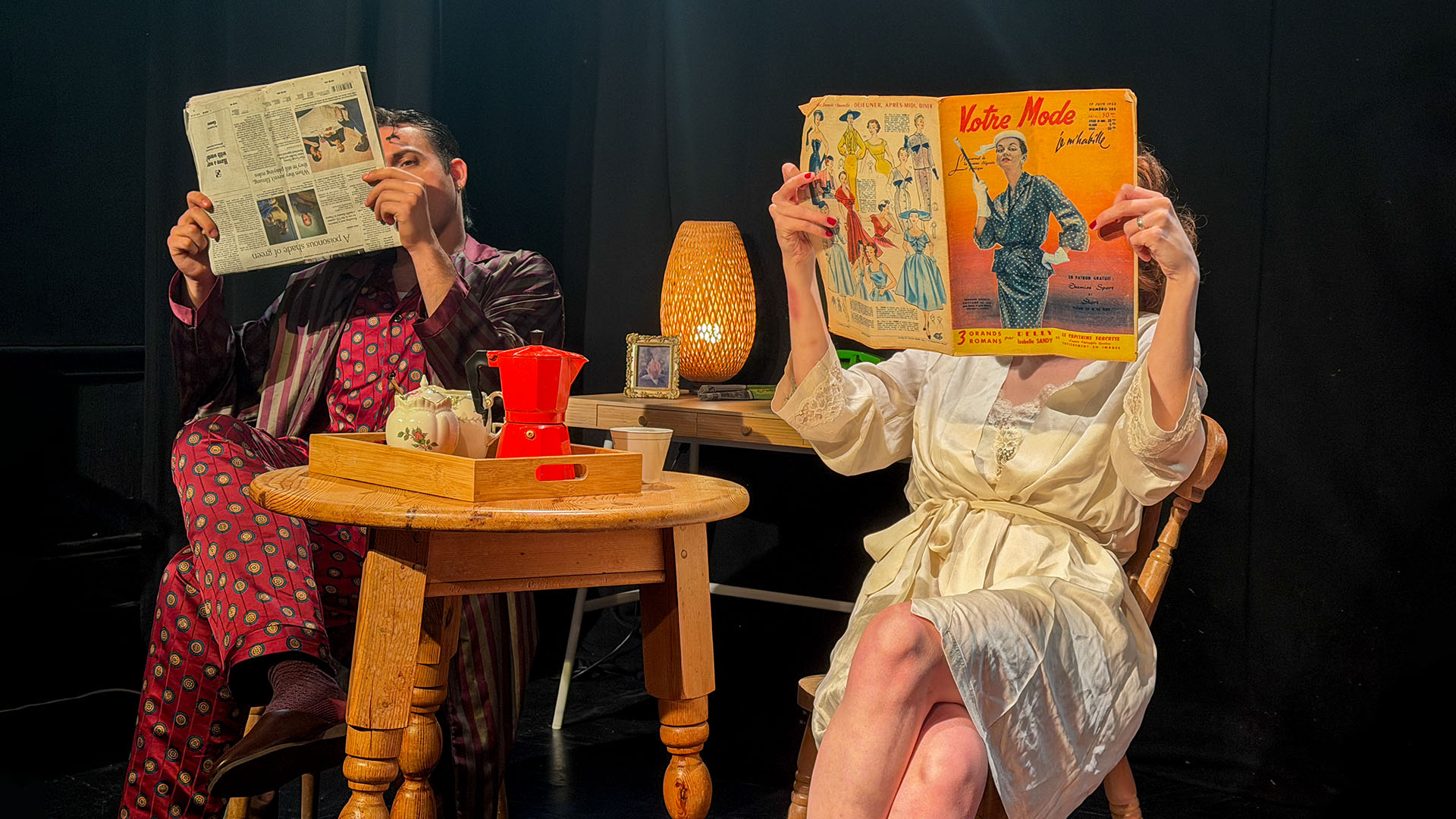
The story is set in Newport, a suburban town ruled by hierarchy, routine, and the pressure to belong. Gregory and Gloria Wilder present a polished marriage and a carefully managed home, but their control begins to slip when neighbours and members of the local garden club invade their private space. What begins as social obligation turns into suspicion, manipulation, and fear. As the couple struggles to protect a dangerous secret, politeness collapses into paranoia and violence, wrapped in sharp absurdity. The play shifts from domestic comedy into darker territory without losing its rhythm.
At the centre of the play are Gregory and Gloria Wilder, a married couple fighting to protect the life they built. Gregory is played by Thomas Billiouw, while Gloria is played by Dany Van Brabant. Their neighbours form the pressure around them. Martha Hueber, played by Evie Weldon, is the overeager outsider who refuses to leave. Phyllis Amberhide, played by Jess Vince-Moin, represents authority and social order within the town. Sherryll Anne Bowman, played by Kgalalelo Thakadu, embodies loyalty to the system, driven by responsibility, desire, and suppressed need. Together, they form the social web that traps the Wilders inside Newport.
Newport is not just a setting but a system. The town runs on appearances and quiet rules that everyone is expected to follow. The Garden Club sits at the centre of that system, presenting itself as harmless while operating as an informal authority. Invitations feel like obligations. Smiles carry judgment. Refusal reads as rebellion. The play understands how power works in these spaces, not through force, but through constant observation and social pressure. The more absurd the rules become, the clearer the danger underneath.

Gloria and Gregory feel like a blend of familiar screen couples pushed into theatrical excess. There is something of Mr & Mrs Smith (2005) in the way attraction and threat exist side by side, where love turns into competition without warning. Their clashes also echo the cruelty of The War of the Roses (1989), where marriage becomes a battleground rather than a refuge. At the same time, their suburban performance recalls the quiet tension of The Americans (2013–2018), where responsibility, secrecy, and desire sit beneath polite routines. These references collapse into a relationship that feels recognisable, exaggerated, and always close to breaking.
The set design keeps things simple and precise. A table, chairs, a bright telephone, a lamp. Nothing feels decorative. Every object has purpose and often becomes part of the action. I have spent time in Etcetera Theatre before, mostly for auditions and personal projects, and I did not expect the space to feel this transformed. With careful staging and strong direction, the room opens up and becomes an active part of the story.
Lighting quietly shapes the emotional flow. Warm tones support moments of domestic calm, while sharper shifts cut through scenes of confrontation and panic. The lighting never pulls focus, but it consistently reinforces mood and rhythm, giving each turn space to land.
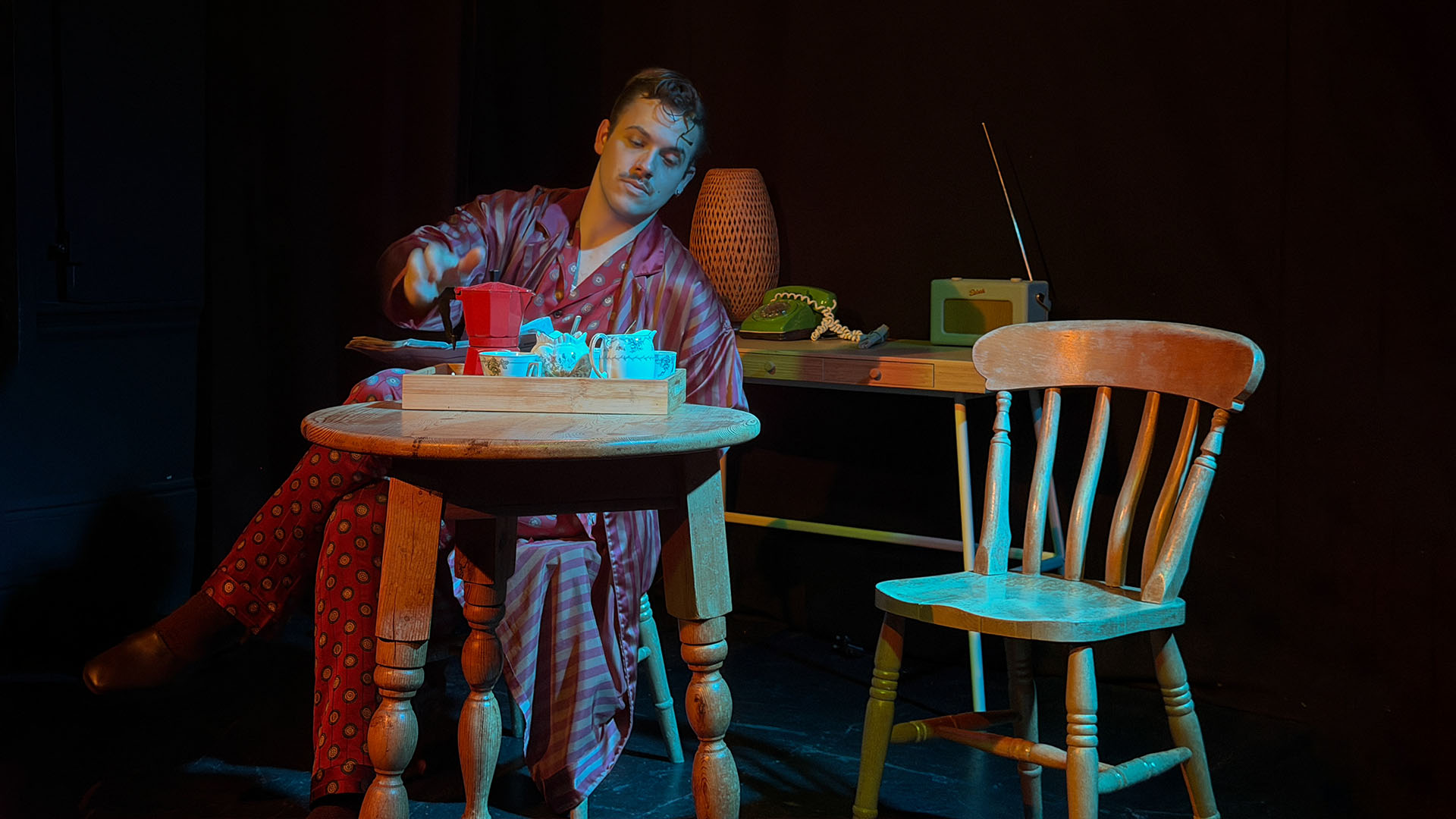
Gregory Wilder sits at the quiet centre of the chaos. He believes in plans, structure, and limits, even as everything around him begins to collapse. Thomas Billiouw plays him with restraint, allowing frustration to build rather than explode. His emotional shift arrives not through noise, but through honesty.
“The excitement has worn off for me.” Gregory Wilder
Gloria Wilder commands the room from her first entrance. She thrives on excess, beauty, and control. Dany Van Brabant gives her sharp precision and bold confidence, never softening her edges. Gloria’s strength feels rehearsed, almost performative, which makes her vulnerability more striking when it surfaces. Her hunger drives the story forward and keeps the danger alive.
“Enough? Darling, I want more.” Gloria Wilder
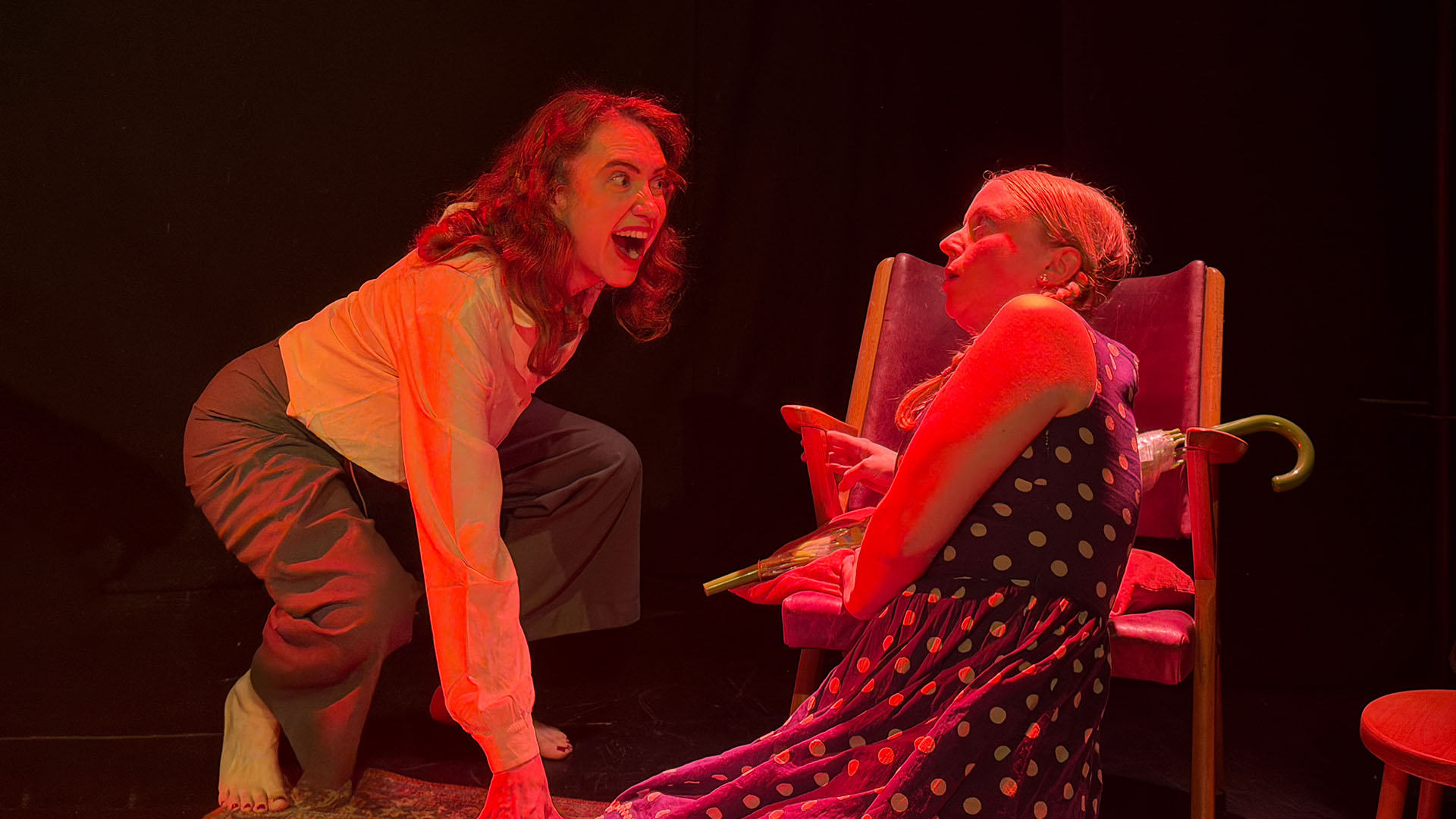
Martha Hueber enters as an intrusion, overstaying her welcome and ignoring every signal to leave. Evie Weldon plays her with nervous energy that slowly reveals something fragile underneath. What begins as comic interruption shifts into emotional weight, exposing the loneliness hidden beneath the Wilders’ polished surface.
“I finally had a friend.” Martha Hueber
Phyllis Amberhide represents order wrapped in politeness. She speaks with authority hidden behind calm certainty. Jess Vince Moin delivers the role with precision and control, making her presence quietly unsettling without raising her voice.
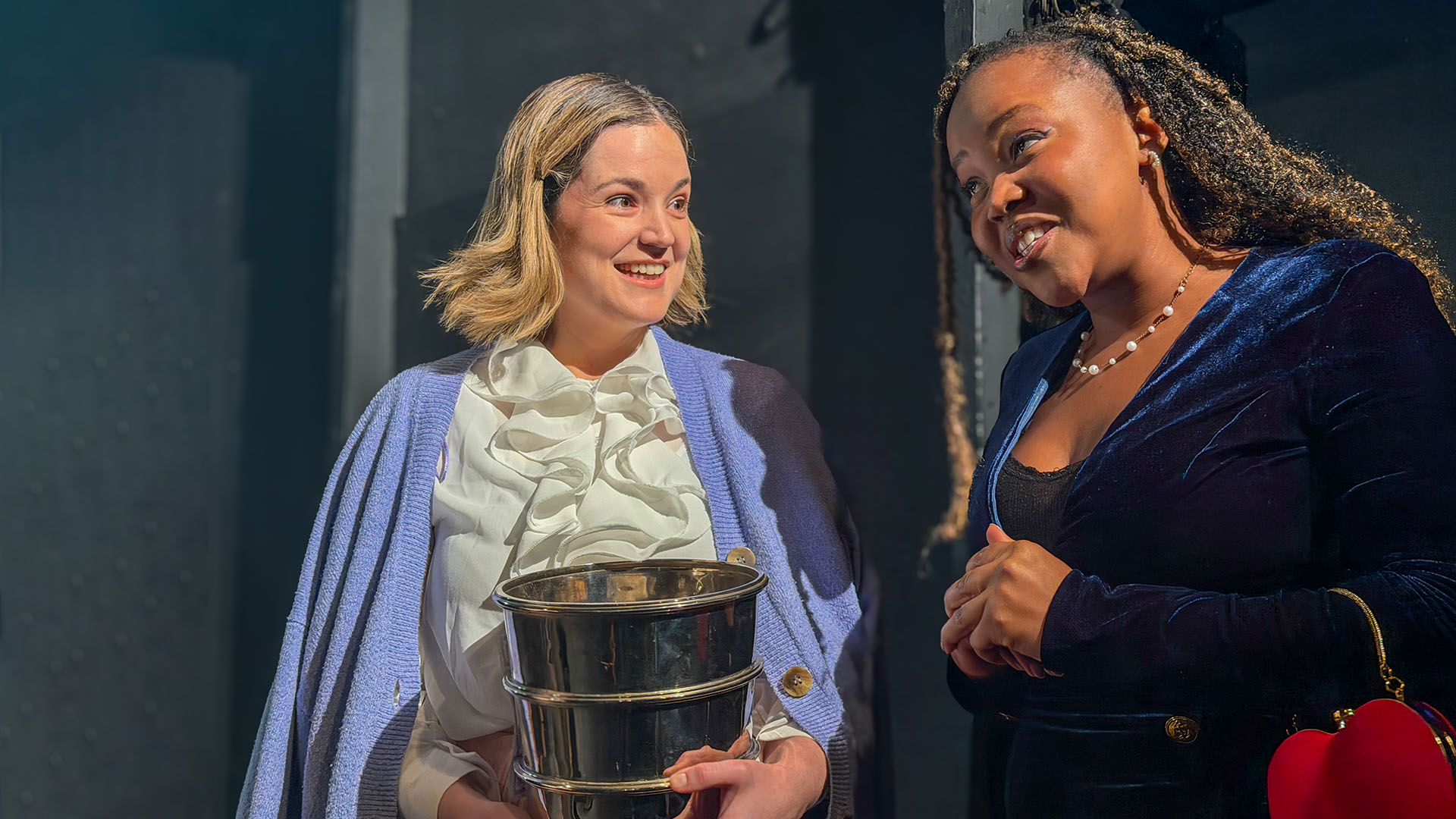
Sherryll Anne Bowman reinforces the rules of Newport with obsessive devotion. She presents herself as responsible and reliable, always ready to serve the needs of others. Kgalalelo Thakadu plays her with tight control, letting discipline sit on the surface while desire simmers underneath. Sherryll’s fixation on Gregory is impossible to miss. She hovers too close, leans in too far, and feels ready to abandon everything she stands for in a single emotional surge. The tension between duty and hunger defines her presence.
What stayed with me most was how the show lingered after it ended. I caught myself talking about it to friends, replaying scenes, and wishing the run had been longer. Not because it felt unfinished, but because it felt worth returning to. I wanted to bring people back with me, to sit in that small room again and watch how the chaos would land a second time.
Wilder does not close itself neatly. It leaves energy behind. You laugh in the moment, then think about it later and realise why. That delay gives the play its impact. It stays alive in conversation, in recommendation, in the quiet frustration of saying, I wish you had seen it.
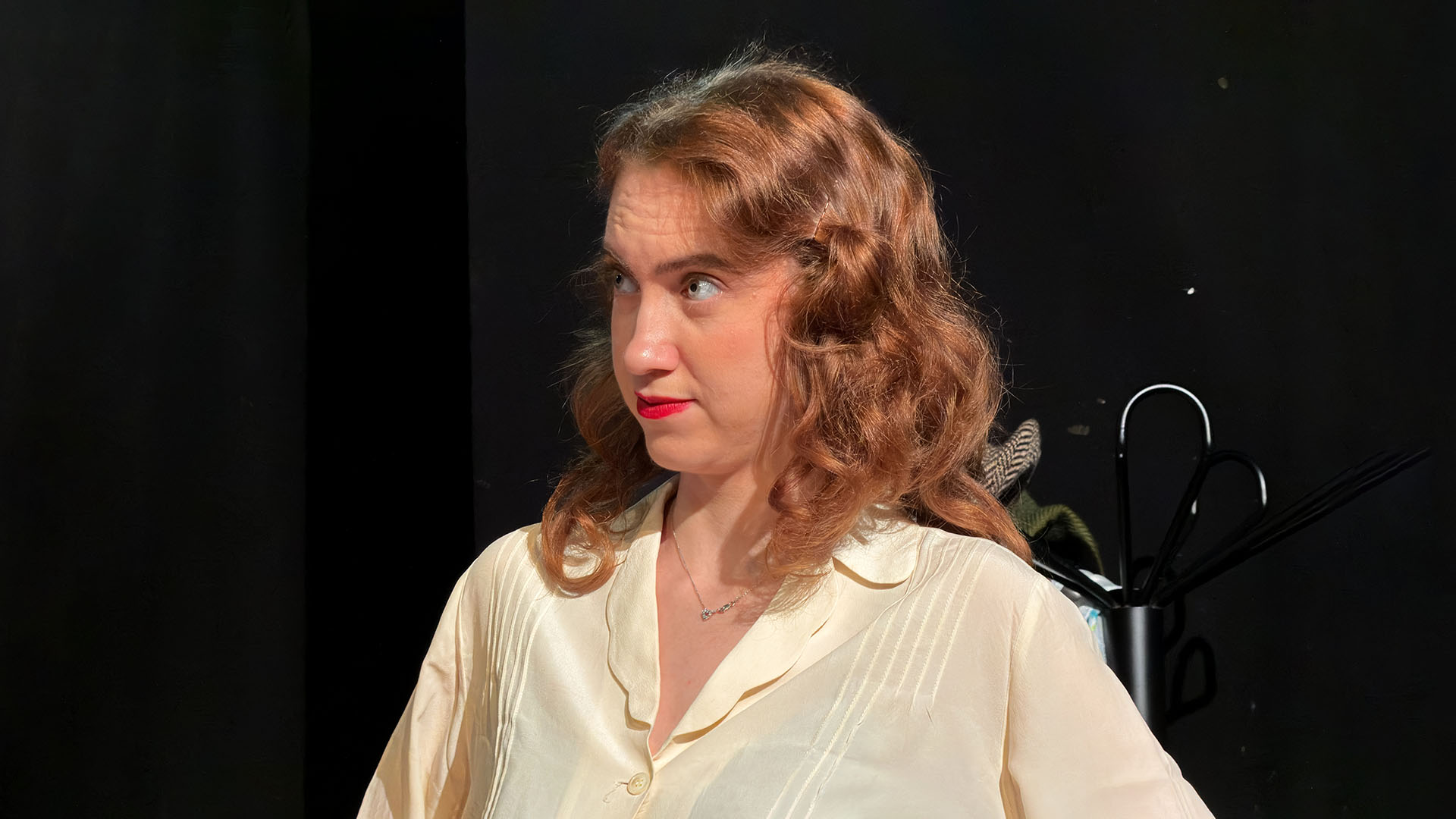
There is a strong sense of connection to the world of Newport. The garden club hierarchy, the petty power games, and the desperate need for status feel ridiculous and familiar at the same time. The cast performs with ease, as if they have lived with these characters for a long time, which gives the story weight beneath the comedy.

Wilder is a reminder that theatre does not need scale to feel complete. It needs clarity, commitment, and performers who trust the material fully. This production has all three. It deserves a larger space and a wider audience. Hopefully, this is only the beginning of its next chapter.
Credits
- Thomas Billiouw as Gregory Wilder
- Dany Van Brabant as Gloria Wilder
- Evie Weldon as Martha Hueber
- Jess Vince Moin as Phyllis Amberhide
- Kgalalelo Thakadu as Sherryll-Anne Bowman
- Created by Thomas Billiouw and Dany Van Brabant
- Co-Director, Jillian Osborne
- Fight Director and Tech, Becca Watkin
- Stage Assistant and Hair and Makeup, Darragh Kempeneer
- Intimacy Rep, Jess Vince Moin


.svg)



Get weekly updates
Follow us -
@theFLICKERMAGAZINE


.png)
Join Our Newsletter
Get a weekly selection of curated articles from our editorial team.
Join Our Newsletter
Get a weekly selection of curated articles from our editorial team.