


Hit Enter to Search or X to close
Monkeyface review at Riverside Studios: Raphael Phillips turns one room into a whole world
Inside a university bedroom, one story stretches into a nightclub, a refuge and a trap, and Raphael Phillips holds every version of it together.
Inside a university bedroom, one story stretches into a nightclub, a refuge and a trap, and Raphael Phillips holds every version of it together.









Monkeyface review at Riverside Studios: Raphael Phillips turns one room into a whole world


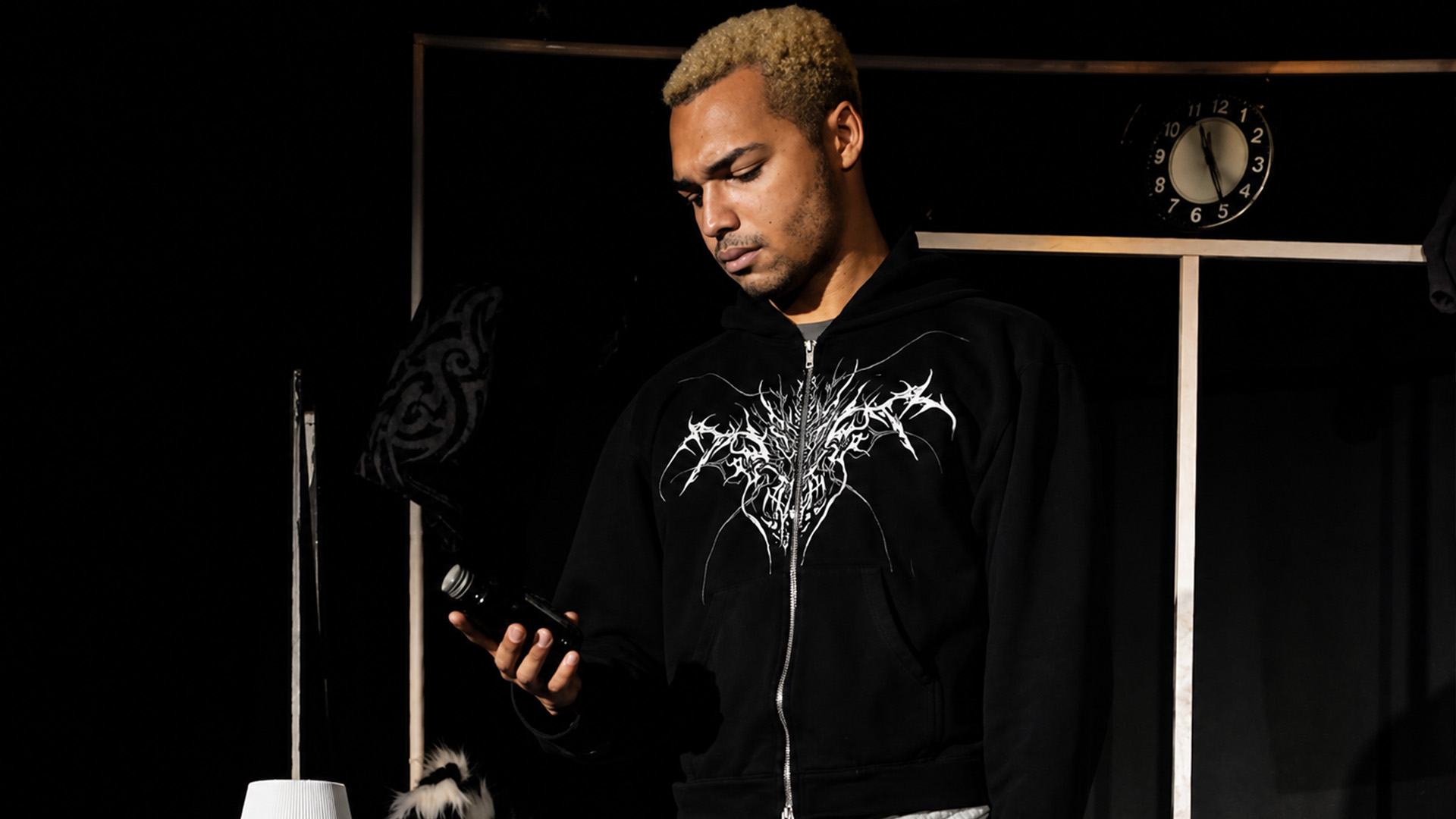
Raphael Phillips's Monkeyface begins inside a cramped university bedroom. The set barely changes throughout the evening, yet it rarely feels confined. Under Mojola Akinyemi's direction, the room becomes a student flat, a Soho nightclub, a family home, an emotional refuge.
Freshers' Week promises reinvention. Soho promises belonging. Both turn out to come with conditions nobody mentions until you've already broken one. The play follows a young Black gay student trying to find his place in London, and Monkeyface explores race, sexuality, mental health and loneliness without ever flattening its central character into any single one of them.
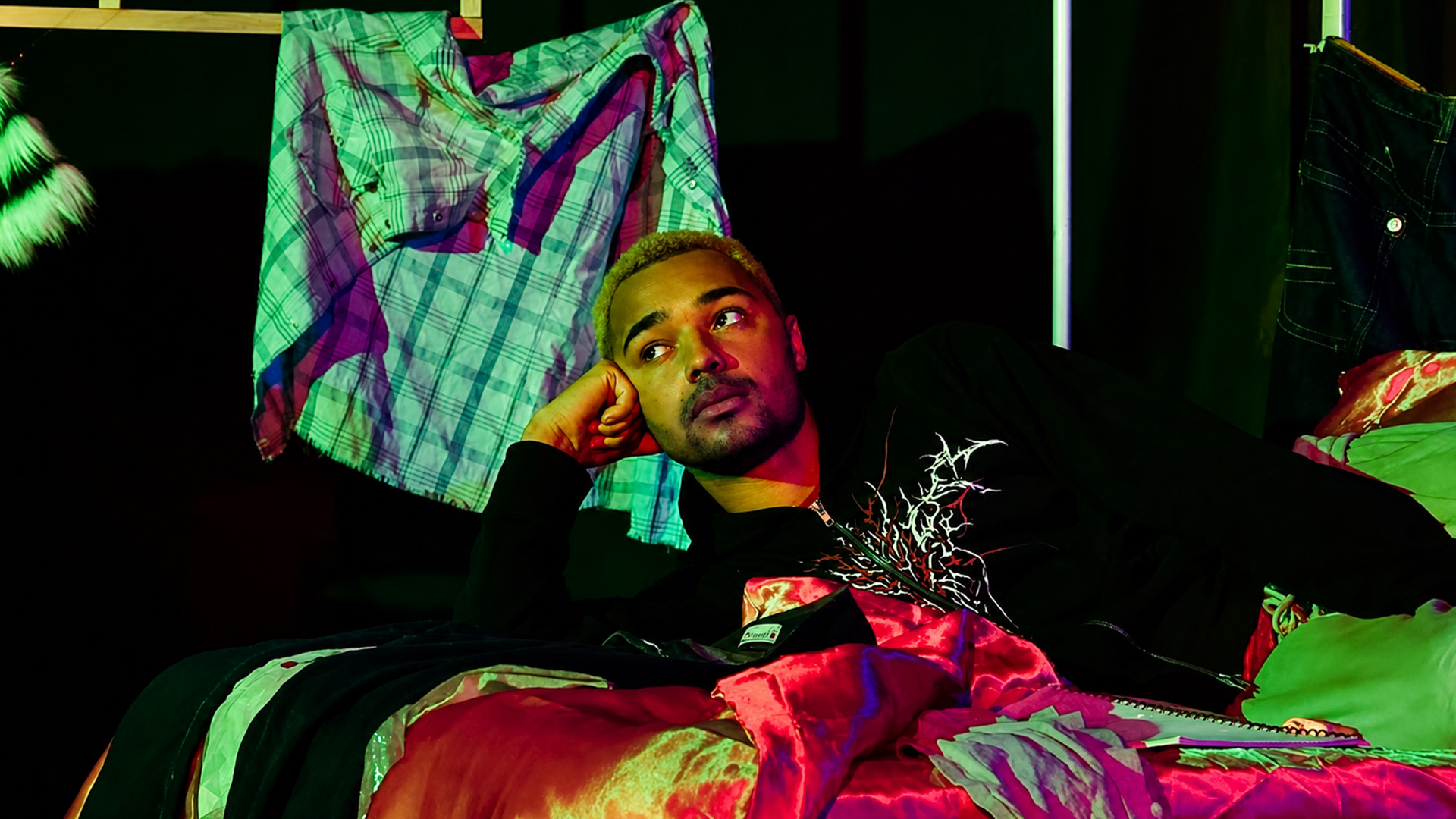
Raphael Phillips carries the production with remarkable control. A one person show leaves nothing to fall back on, yet he shifts effortlessly between narrator and the people who shape his journey. Alice's concern feels warm before it curdles into quiet exhaustion. Elijah enters with confidence and humour, delivering some of the play's most honest observations. Each character comes through subtle changes in posture, rhythm and voice, small shifts that make every conversation feel genuine.
The direction deserves equal credit. Akinyemi keeps scene changes to a minimum and lets transitions happen in full view of the audience, trusting viewers to track the emotional journey on their own rather than signposting every shift with a blackout.
The bedroom itself becomes one of the production's strongest ideas. It opens as a place of possibility, fills with friends, music and excitement during Freshers' Week, then slowly empties out into something closer to isolation. The set barely moves. Isha Bah's lighting does the work instead, changing how the audience experiences the same four walls as the night goes on. Joe Harrington's sound design carries a version of the same idea: pop music, club anthems and the noise of student life give way, again and again, to long stretches of silence that sit under the character's growing isolation. It's especially effective straight after the nightclub scenes, where the energy drops out almost instantly and leaves one person alone with his thoughts.
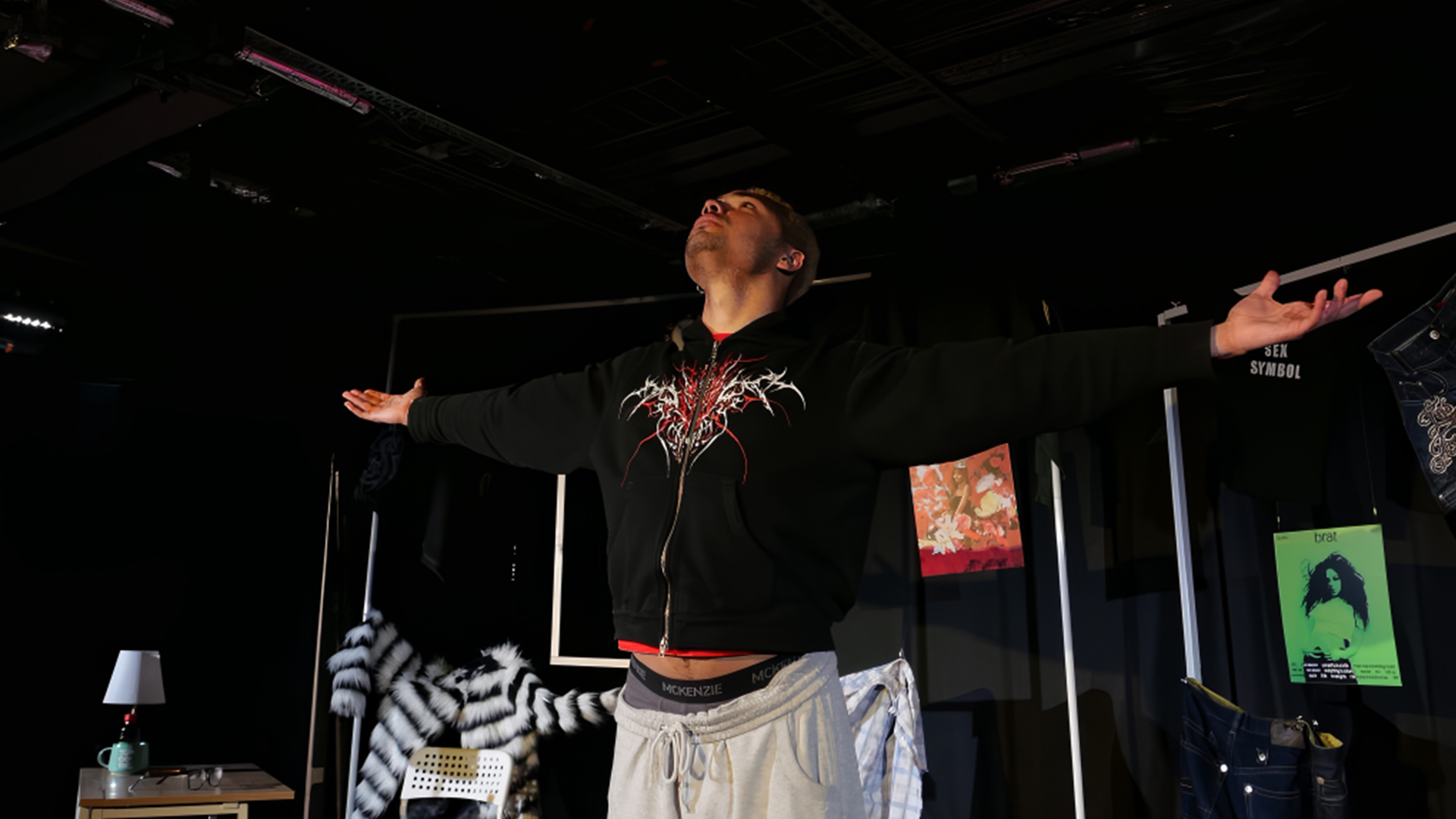
One of the strongest scenes arrives when Elijah introduces him to Black queer spaces for the first time. It initially feels like the belonging he has spent the entire play searching for. The energy shifts, the music changes, and for a brief moment the production lets both its character and its audience believe he has finally found home. When that certainty starts to fracture, the moment lands because Phillips has earned it rather than forced it. The confrontation with Alice works the same way from a different angle. Neither of them is entirely right. Alice admits she can no longer carry the emotional weight being placed on her, while he struggles to explain that much of his pain comes from somewhere she will never fully reach. Nobody wins the argument, and that's exactly why it works.
A few things hold the piece back. A handful of monologues explain feelings Phillips has already shown us through performance. The script is at its best when it trusts silence and stillness to do the talking. When it spells things out instead, the pace slips and some of the emotional weight goes with it.
As a white gay man who moved to London from Germany more than twenty years ago, I cannot pretend this is my story. The experiences of racism, fetishisation and navigating queer spaces as a Black man are not mine to claim, and the play never asks me to. What I did recognise was the search for belonging itself: arriving in London with few friends, believing the gay scene would hand you instant community, then finding out that acceptance usually comes with conditions attached. Monkeyface never suggests those two experiences are equal. It shows how loneliness can still connect people whose journeys have almost nothing else in common.
What impressed me most was the production's restraint. It never reaches for spectacle to win the audience's sympathy. The writing, the direction and Phillips's performance carry that weight on their own.
The final image is one young man deciding he owes himself the chance to step outside the room that has been both his shelter and his prison. No music swell. No big speech. Just a door, and a choice.

Monkeyface is running until 21 July. Tickets are available here.
Credits
Director: Mojola Akinyemi
Writer: Raphael Phillips
Cast: Raphael Phillips
Production: BLACKRIOT Productions, Riverside Studios
Running Time: 70 minutes
Rating: 4/5


.svg)





Get weekly updates
Follow us -
@theFLICKERMAGAZINE


.png)
Join Our Newsletter
Get a weekly selection of curated articles from our editorial team.
Join Our Newsletter
Get a weekly selection of curated articles from our editorial team.